
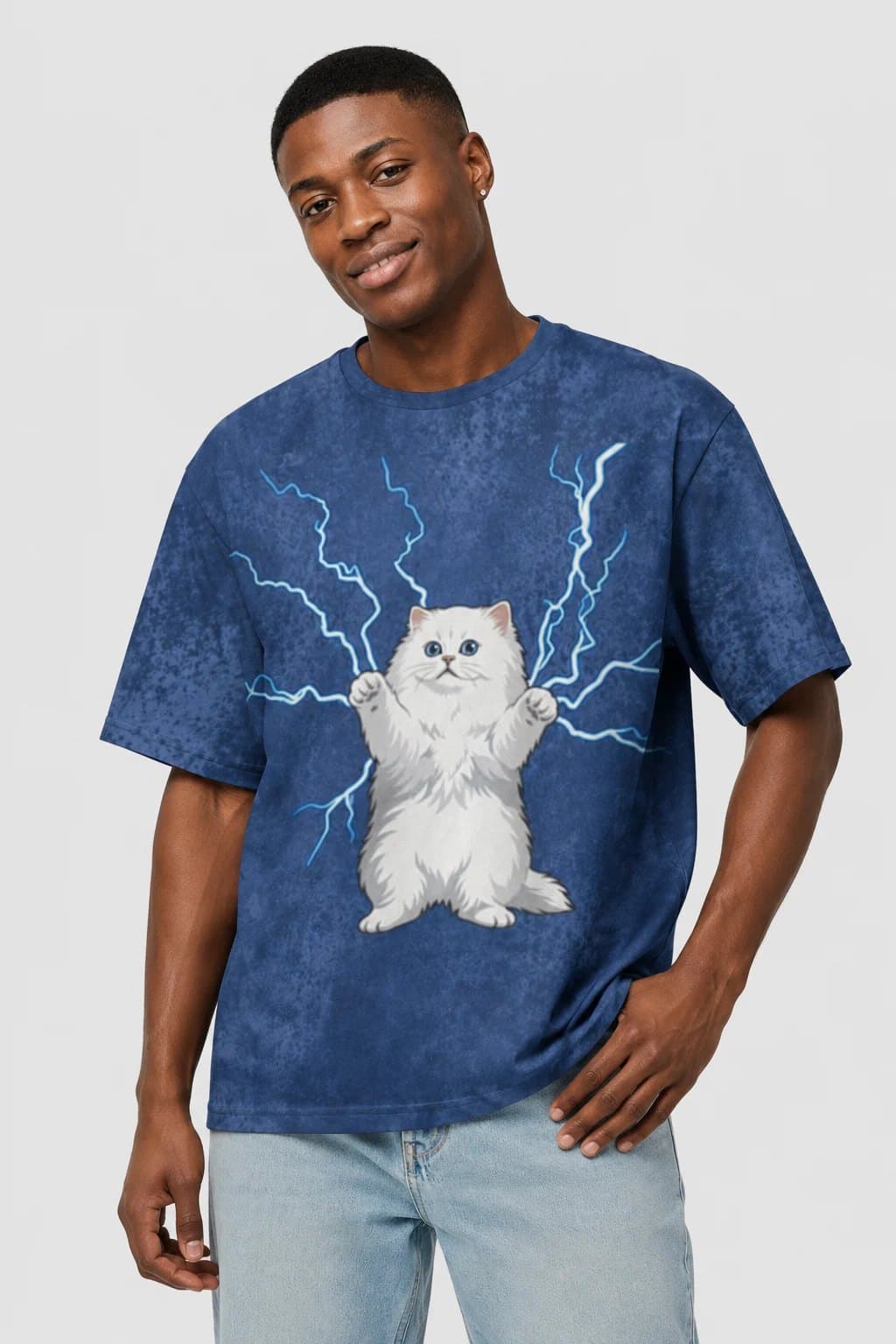
Oversized T-Shirt Fit: Where the Seams Fall, and When to Size Down
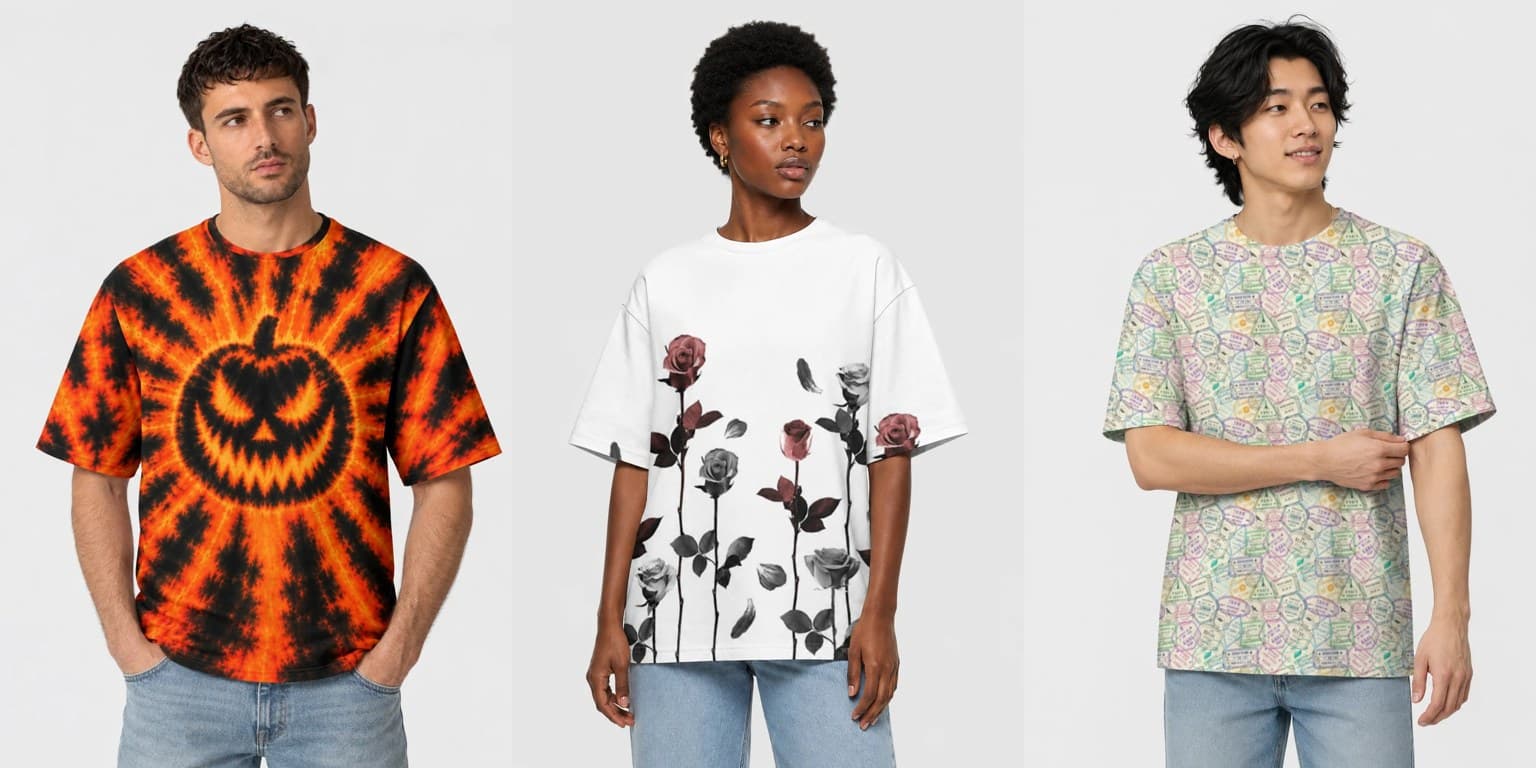
Oversized is a cut, not a size: where the shoulder seam falls, what 8 cm of extra chest width does, and when to size down.
Oversized is a cut, not a size: where the shoulder seam falls, what 8 cm of extra chest width does, and when to size down.
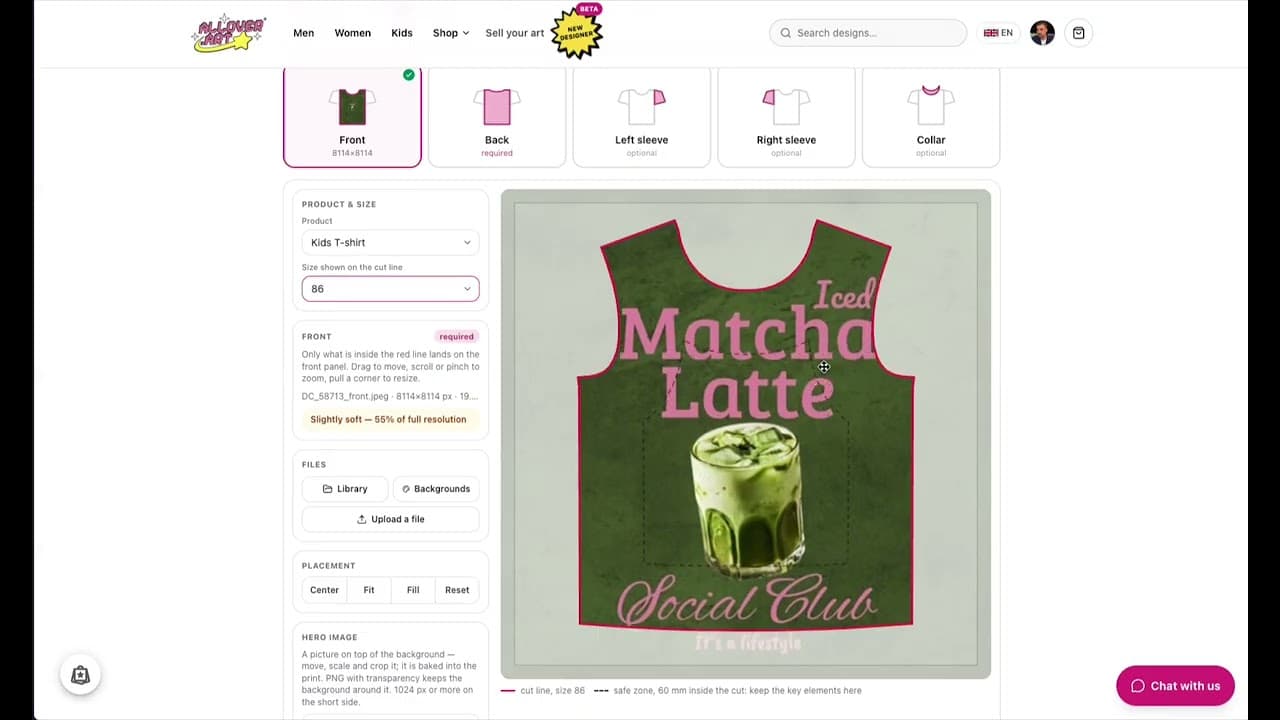
Our new Designer Studio lets you place your artwork across the whole garment - front, back, sleeves, collar - preview the mockups and publish to the catalog. Here is the full walkthrough.
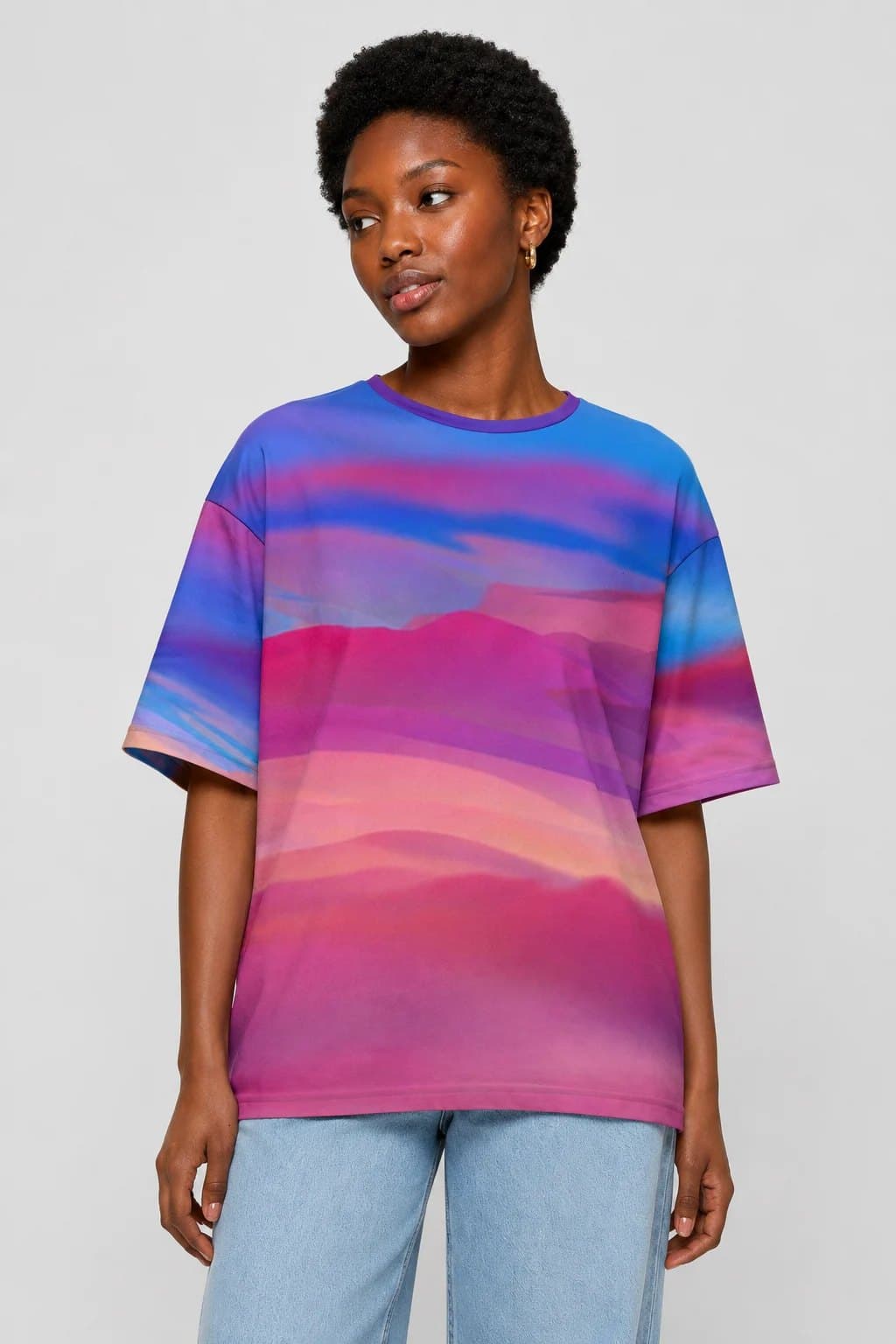
Sublimation is a method, all-over print is a coverage — and the method dictates the fabric. The honest scorecard: price, neon, feel, breathability.
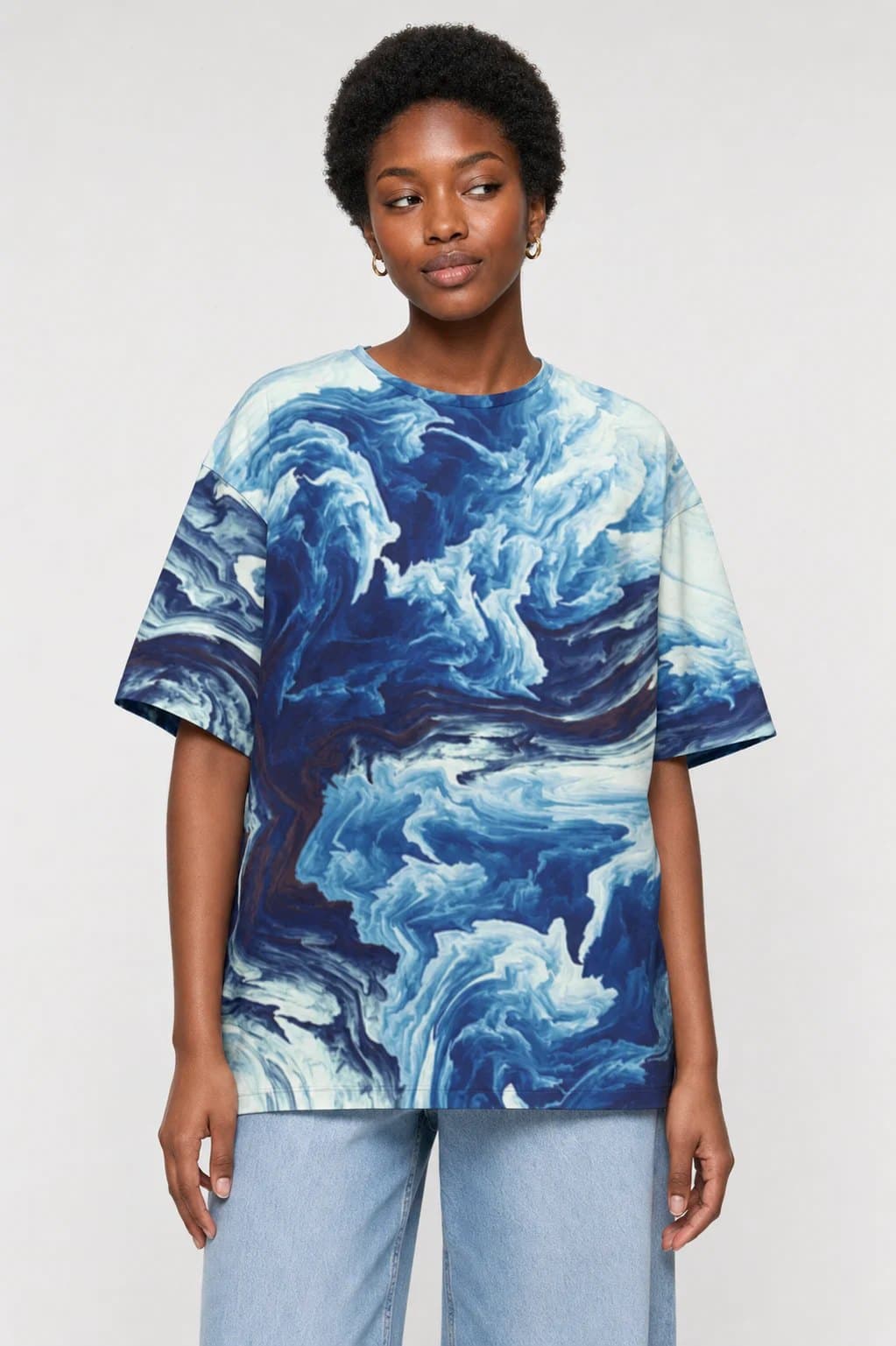
Full print, all-over print, AOP, edge-to-edge, sublimated — the jargon collapses into two questions: where the ink goes and what the fabric is. A ten-second checklist for reading any listing.

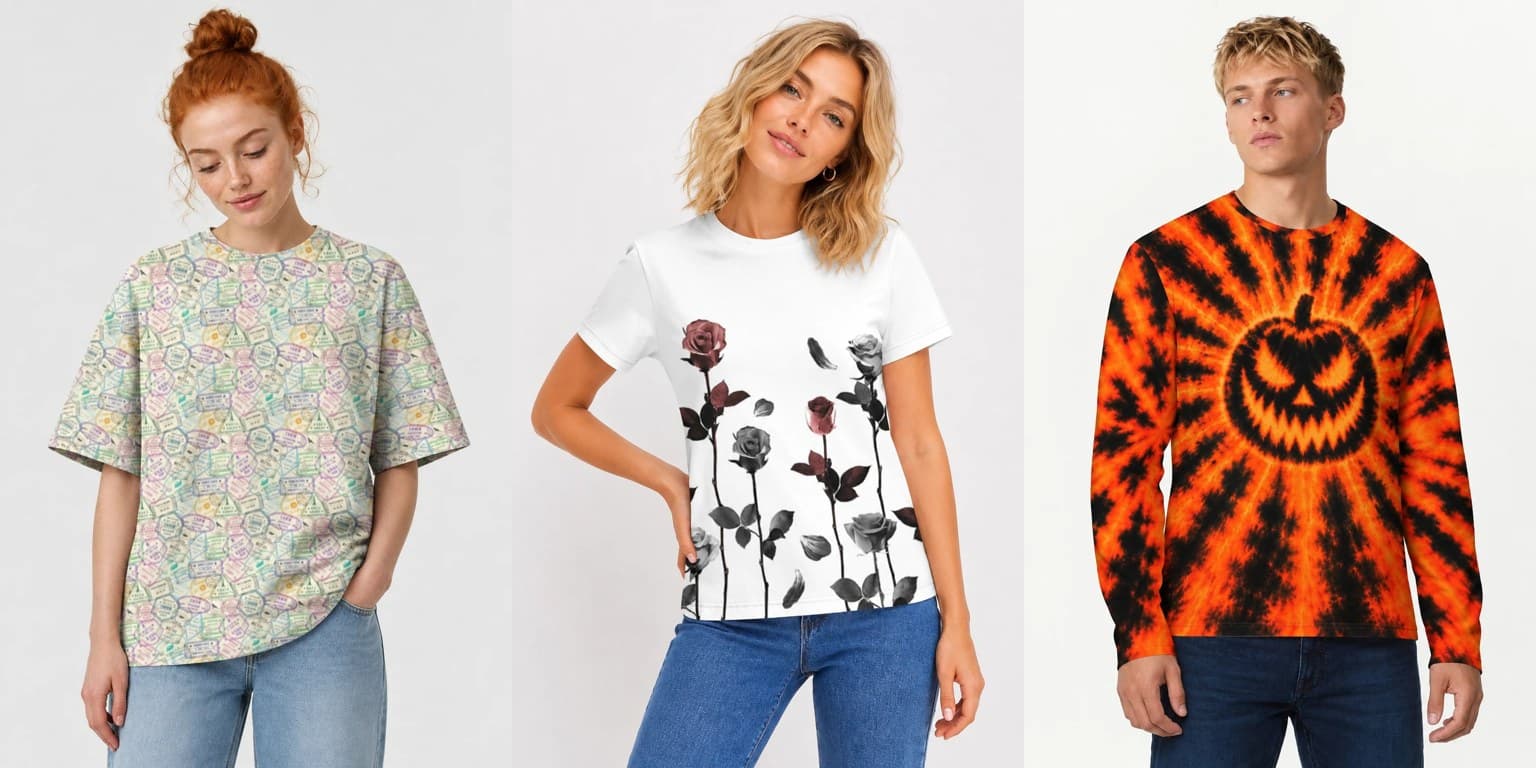
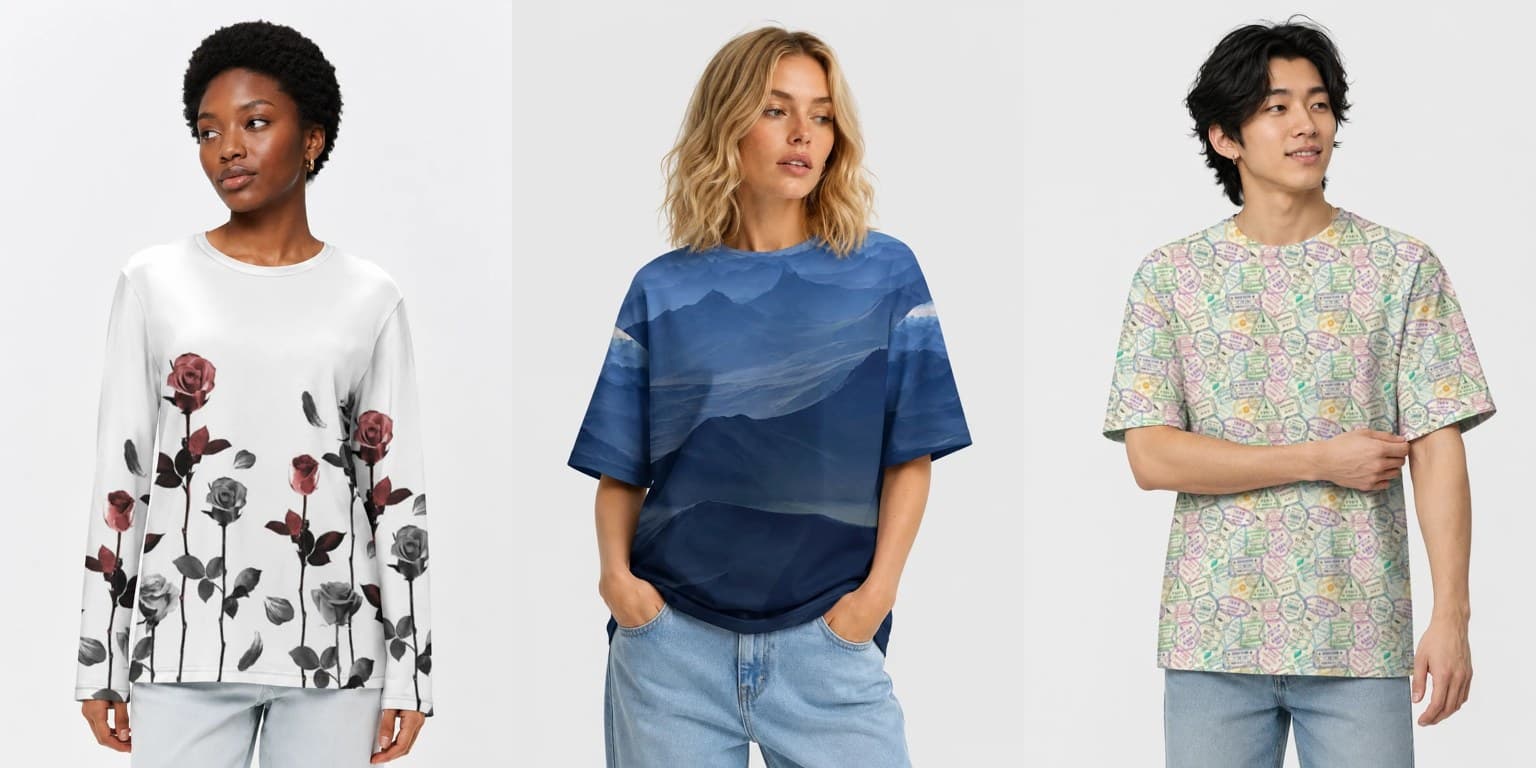
A vintage floral tee reads as vintage because of muted color and an aged background. Here the fading is drawn in and printed with reactive dye on 100% cotton — not washed into the fabric.
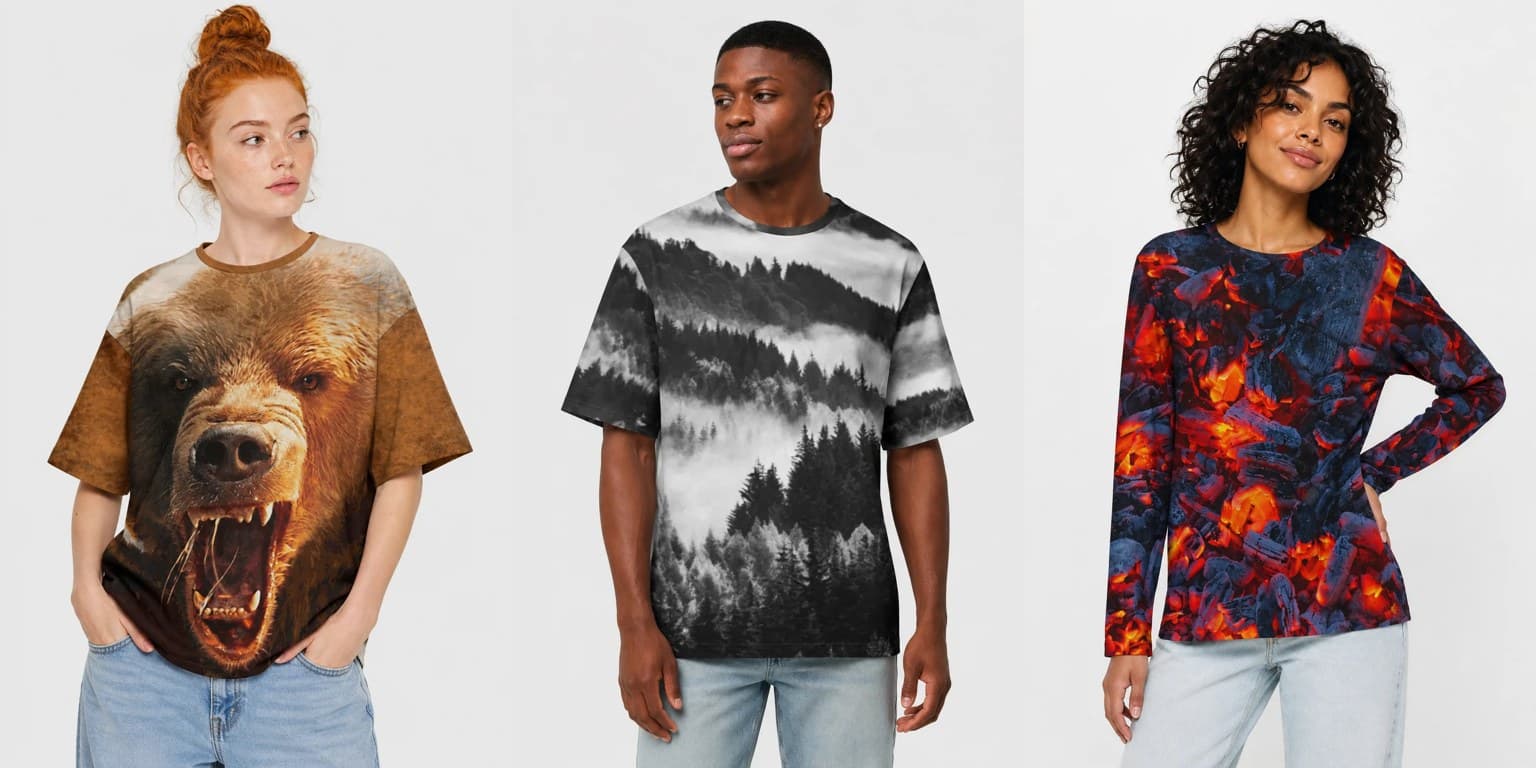
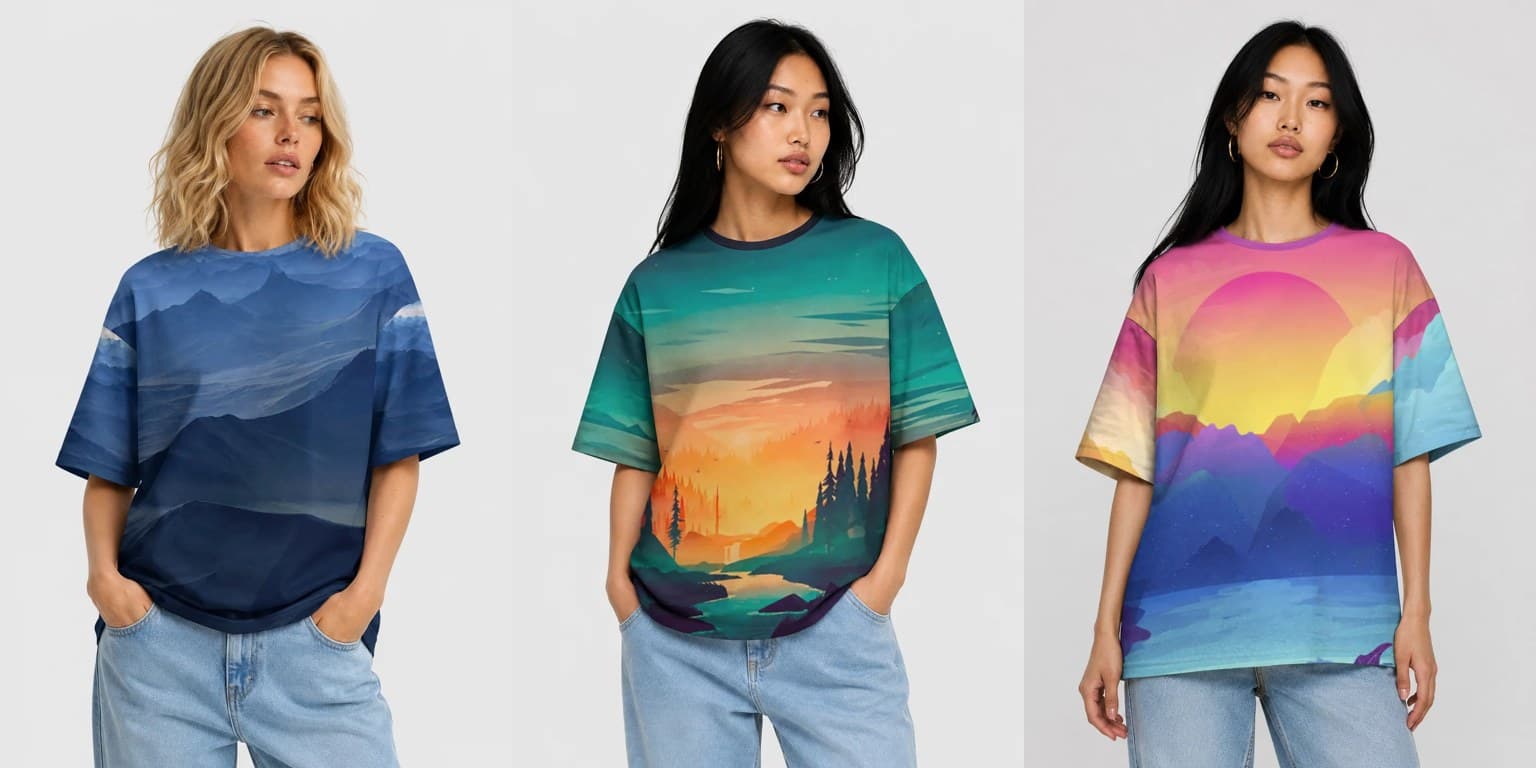
Synthetics win the sweaty summit, cotton wins the trail and the campfire. All-over print hiking shirts in reactive dye on 100% cotton.

A long sleeve is the most fabric we print on — the design runs from collar to cuff because the cloth is dyed edge to edge before it is cut and sewn.

Beer steins, pretzels, and sausages printed edge to edge on 100% cotton — plus the honest order-by math for the festival season and US delivery windows.

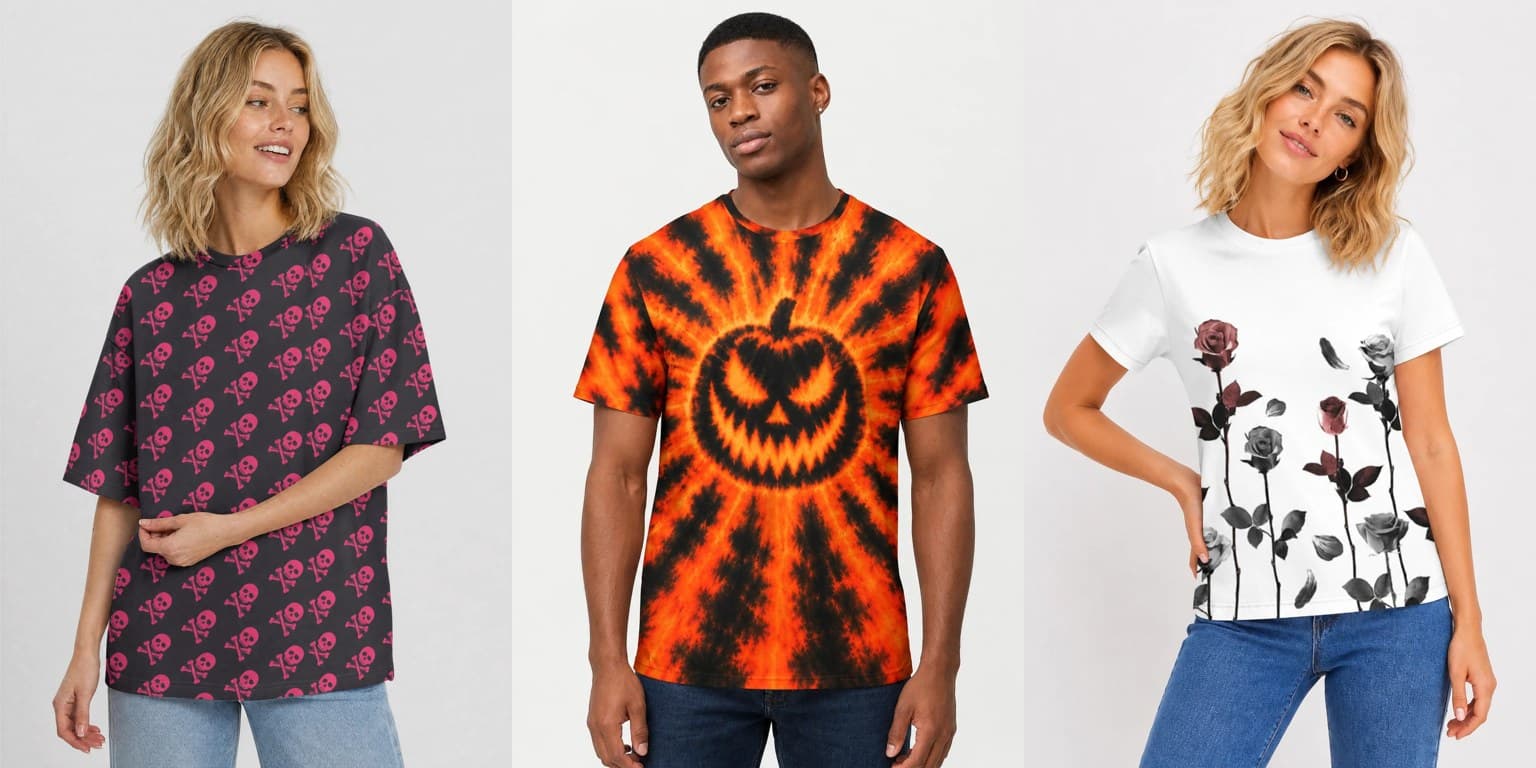
Full-coverage Halloween shirts on 100% cotton: skulls, horror scenes, and kawaii-spooky ideas — plus when to order so the shirt arrives before October 31.

Three printing technologies age three different ways: surface ink cracks, sublimation holds but the polyester ages, reactive dye is the thread itself. Fifty washes, no invented lab.

A fluid-art or marble tee reads as fabric, not as a picture on a shirt — which is why people who don't wear prints wear abstraction anyway. One loud piece, plain everything else.

Almost every men's all-over tee on the market is sublimated polyester. The fabric line, the seams and the sleeve photos tell you the truth — this is how to read them.

A placement print lives inside a frame; an all-over print owns the whole shirt. How to tell them apart in product photos and which one fits your design.
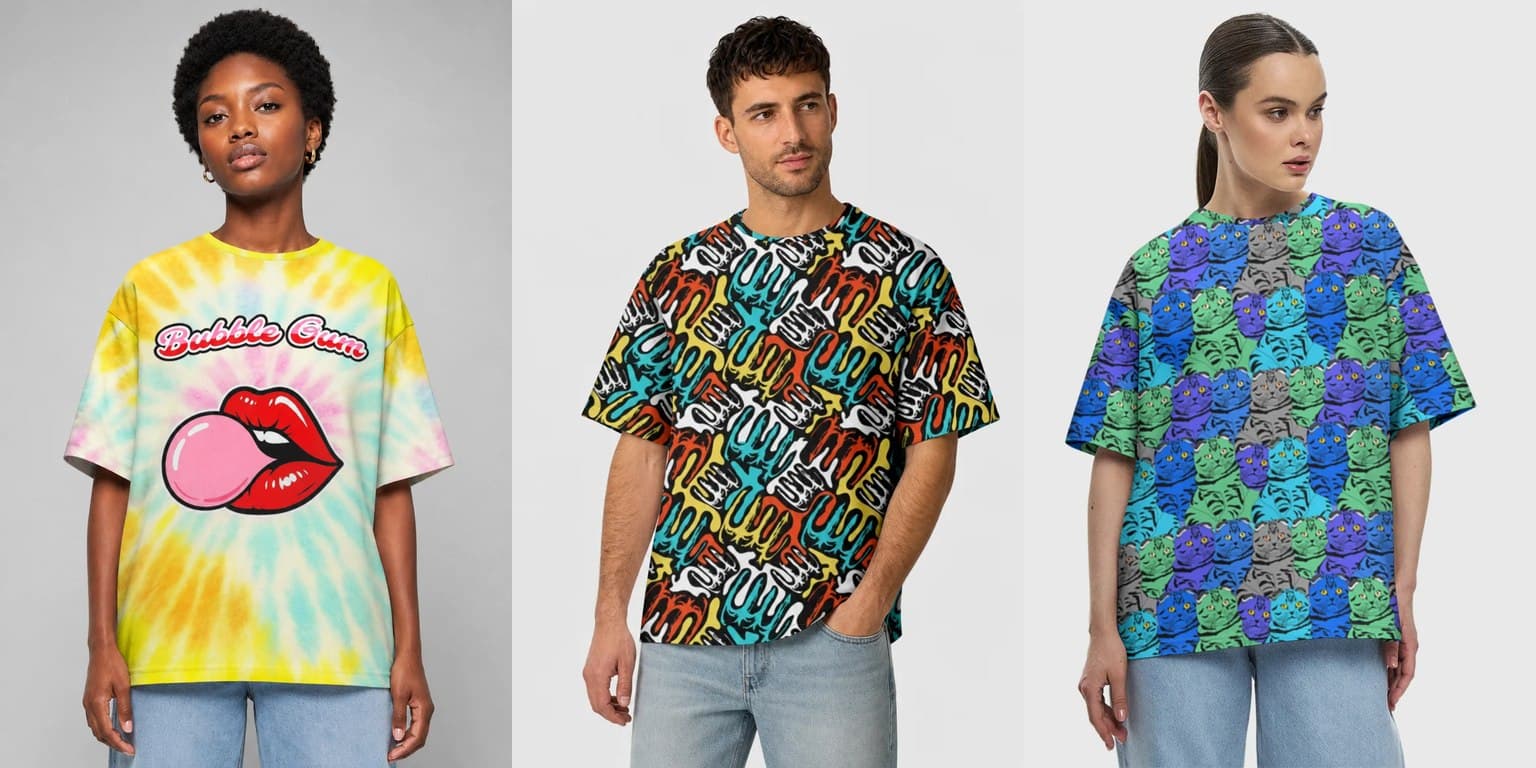
Pop art never wanted a frame — it wanted multiplication. Why the loudest art movement of the 20th century reads best printed edge to edge into cotton fiber.
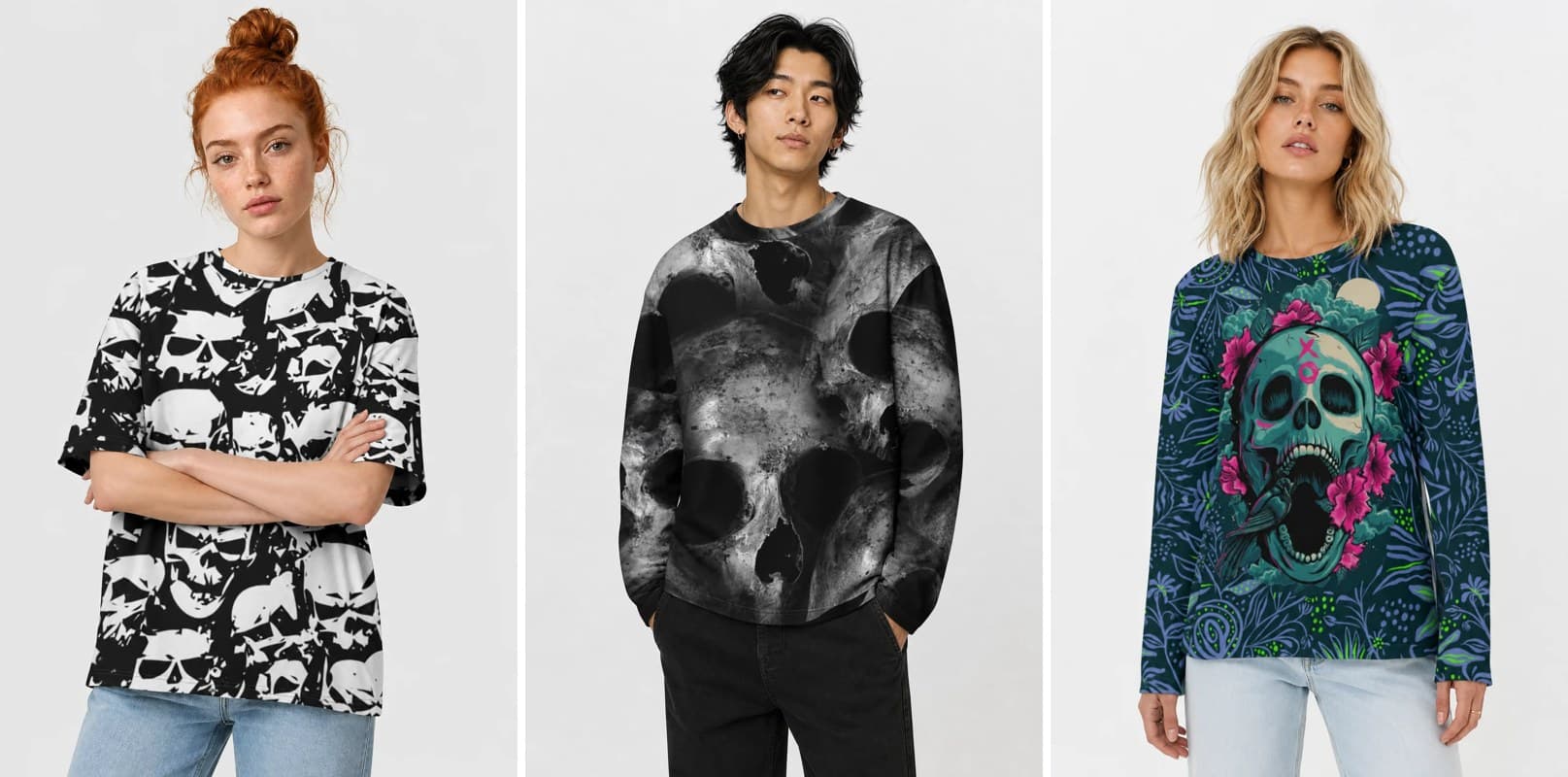

Photos won't tell you the fiber. The listing will — if you know which seven lines to read. A one-minute checklist that works on any store, including ours.

Ask "where can I buy an all-over print cotton tee" and you get a list of stores that mostly print on polyester. Here is how the market actually splits — and the three questions that sort any store in a minute.
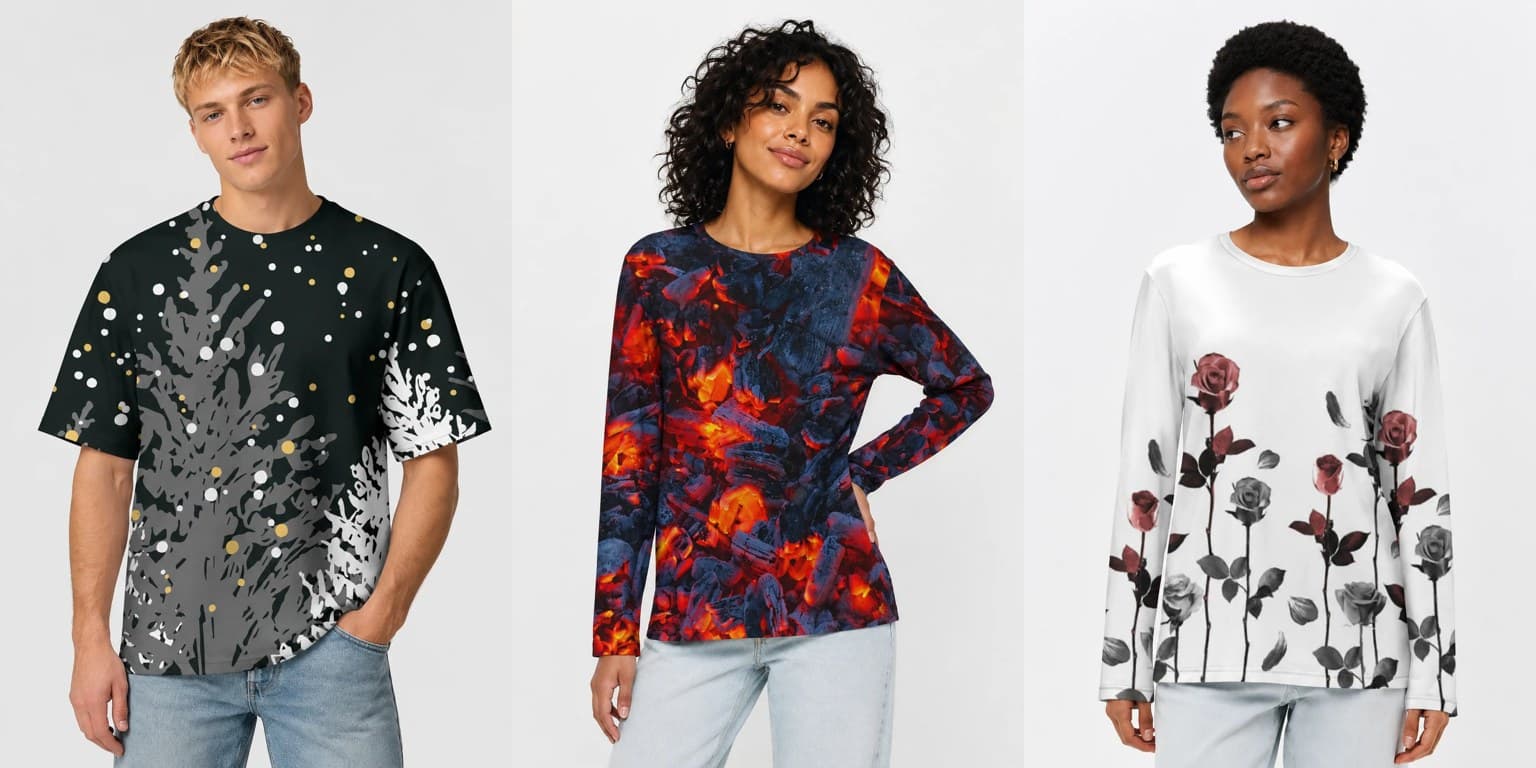
Most print-on-demand keeps a warehouse of blank shirts and prints on them. We keep cloth. Here is what changes when the garment does not exist until you order it.
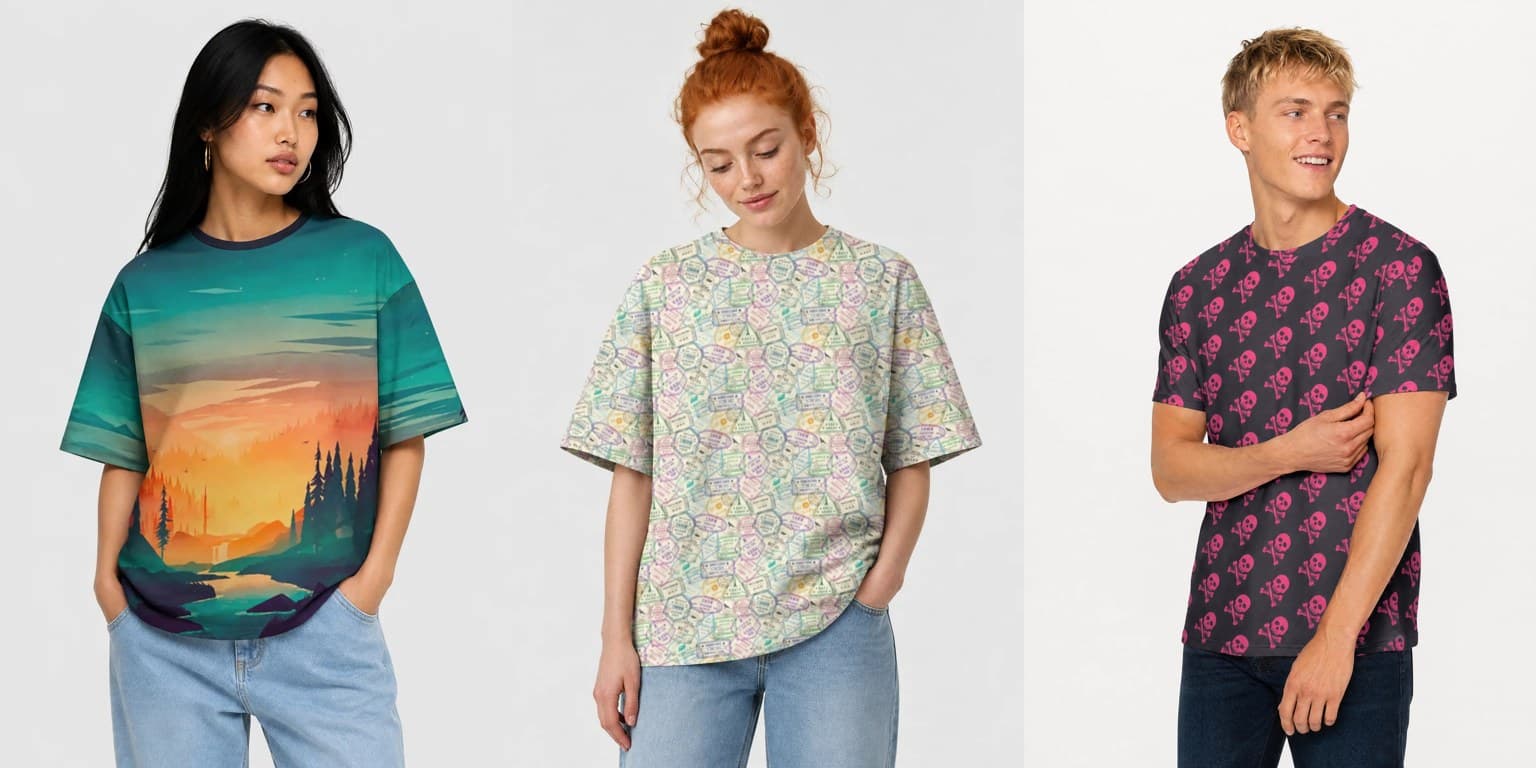
Two ways to hand us a design: front and back artwork we lay out for you, or a print-ready 8114×8114 canvas you author yourself. Sizes, layout anatomy, safe zone, seams.
Programmers got WYSIWYG in the eighties. Clothing never had one — until a photo out of a plane window became the fabric of a shirt.
Tiling, scale, clustering and the ±2% seam shift: what a repeating pattern needs to survive being turned into clothing.
Most all-over print is polyester because sublimation only bonds to synthetic fiber. Reactive dye bonds to cotton instead — how to tell what you're buying.

12–27 days to the US door, and here is what happens inside them: we print the fabric first, then cut and sew the garment from it.

Sellers say the margins are gone, buyers say prints crack. Same problem: DTG hit its ceiling. What the category next door offers designers — and what it costs them.

Stone wash costs water and damages the fiber. Printing the worn look instead gives you a shirt that looks a decade old and hasn't been abused once.
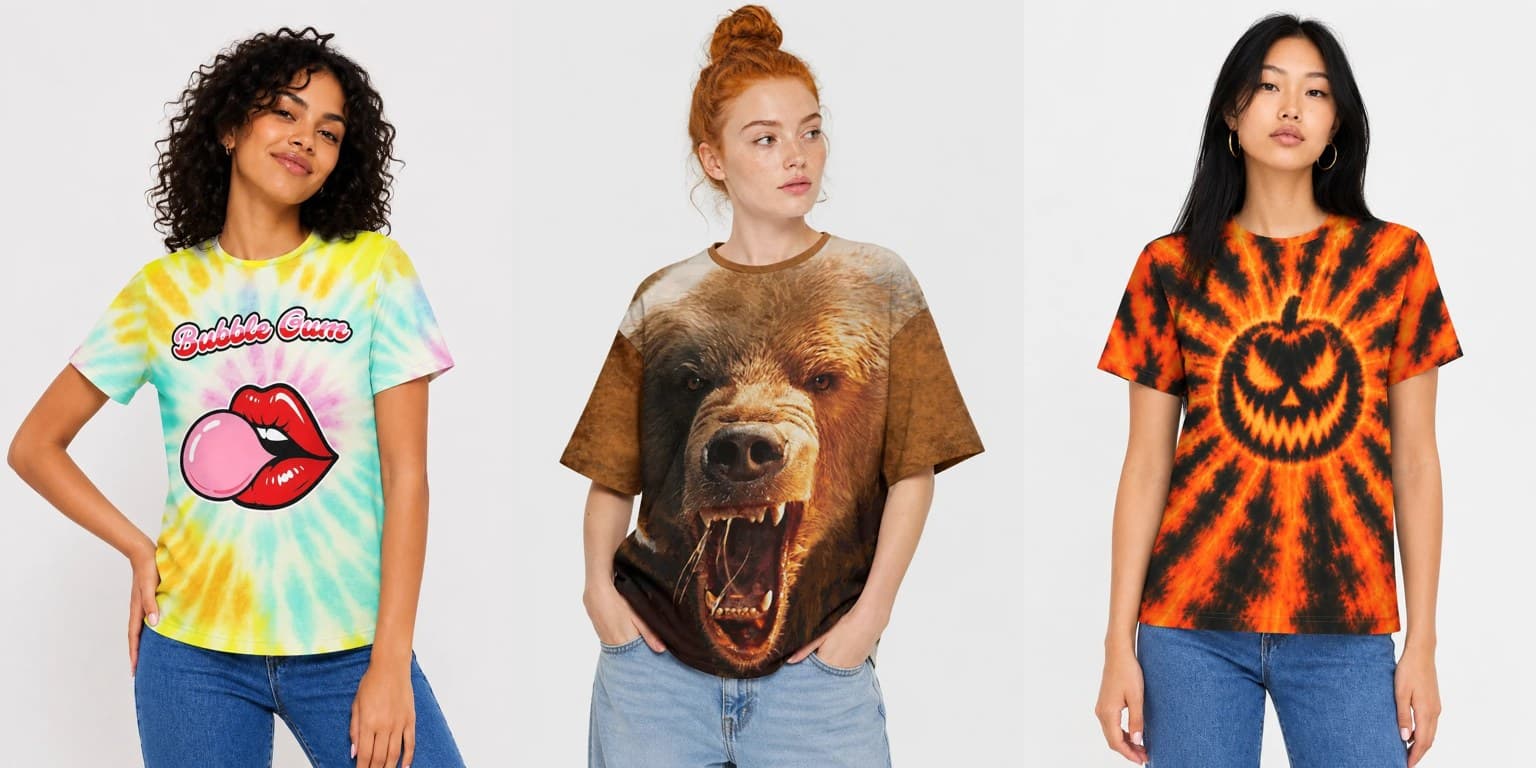
T-shirt prints crack because the ink is a film sitting on the fabric. Dyed-in prints have no film — the color is bonded into the cotton, so they fade slowly and never crack or peel.
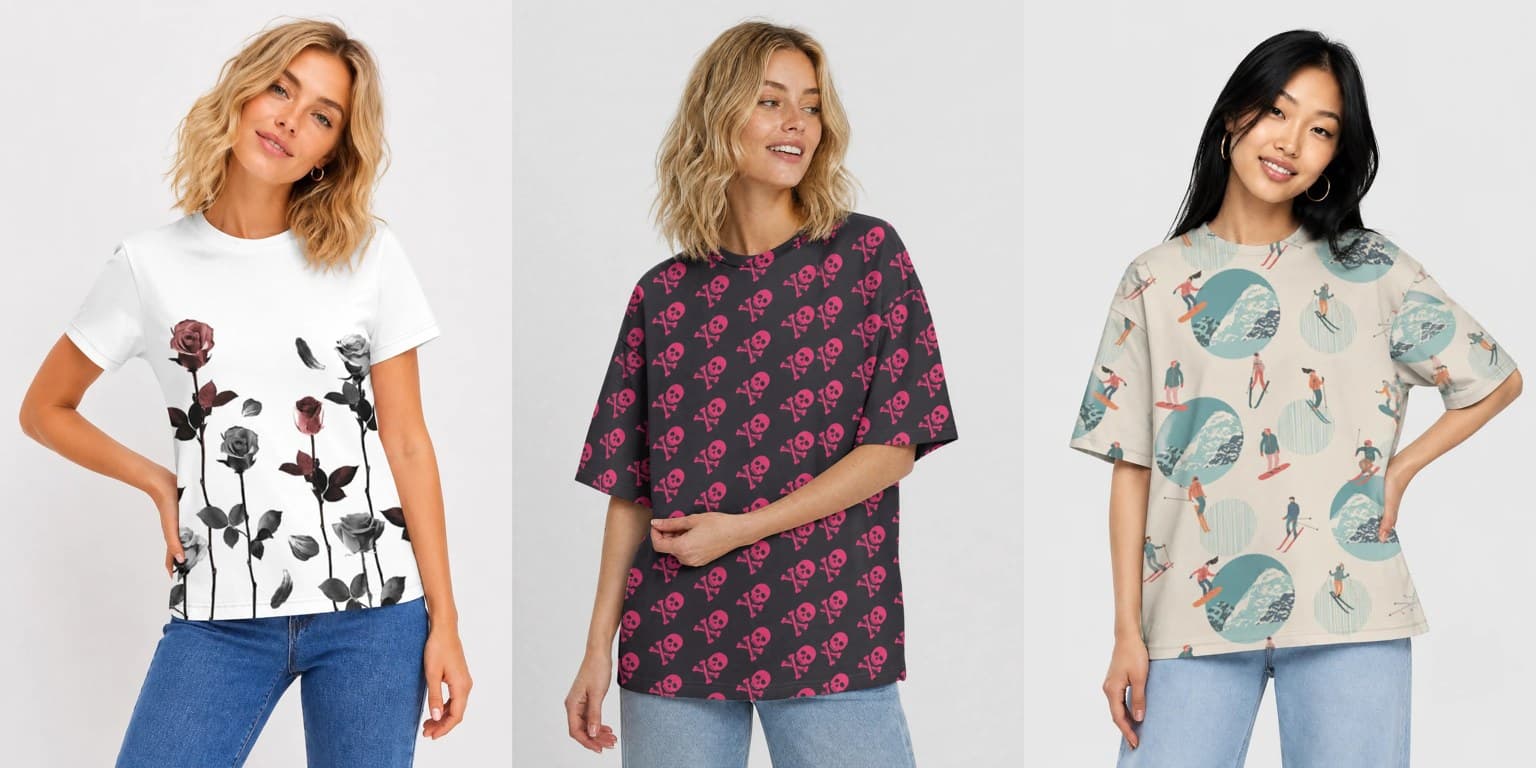
Money, rights, files, moderation, payouts — the questions designers ask us by email, answered in one place.

Cotton cycle up to 60°C, tumble dry, iron — that's the entire care list. When the color is bonded into the fiber, there is no print to protect.
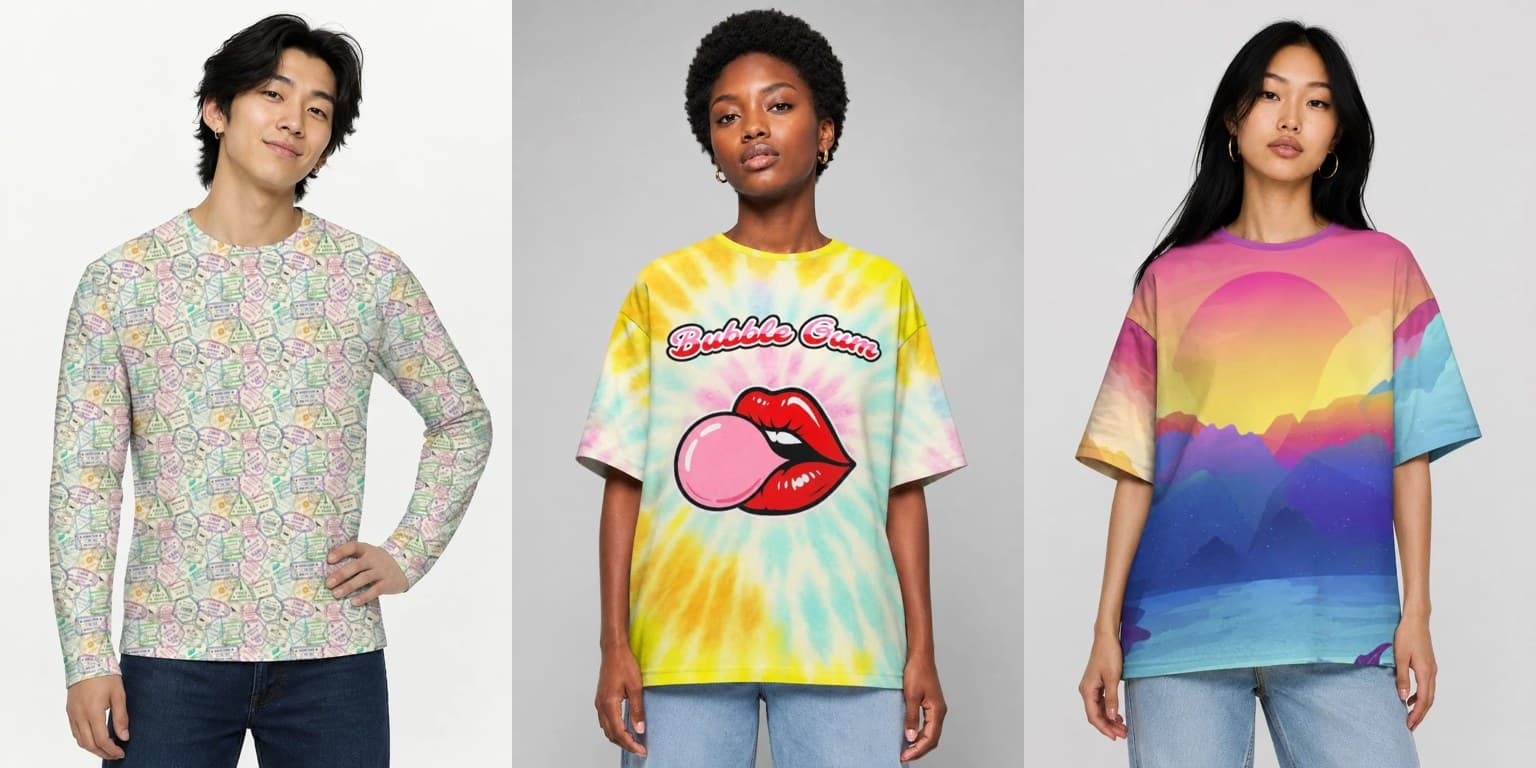
The title is the product name, the search text and, occasionally, a legal problem. We don't rename designers' work — which puts the weight on you.
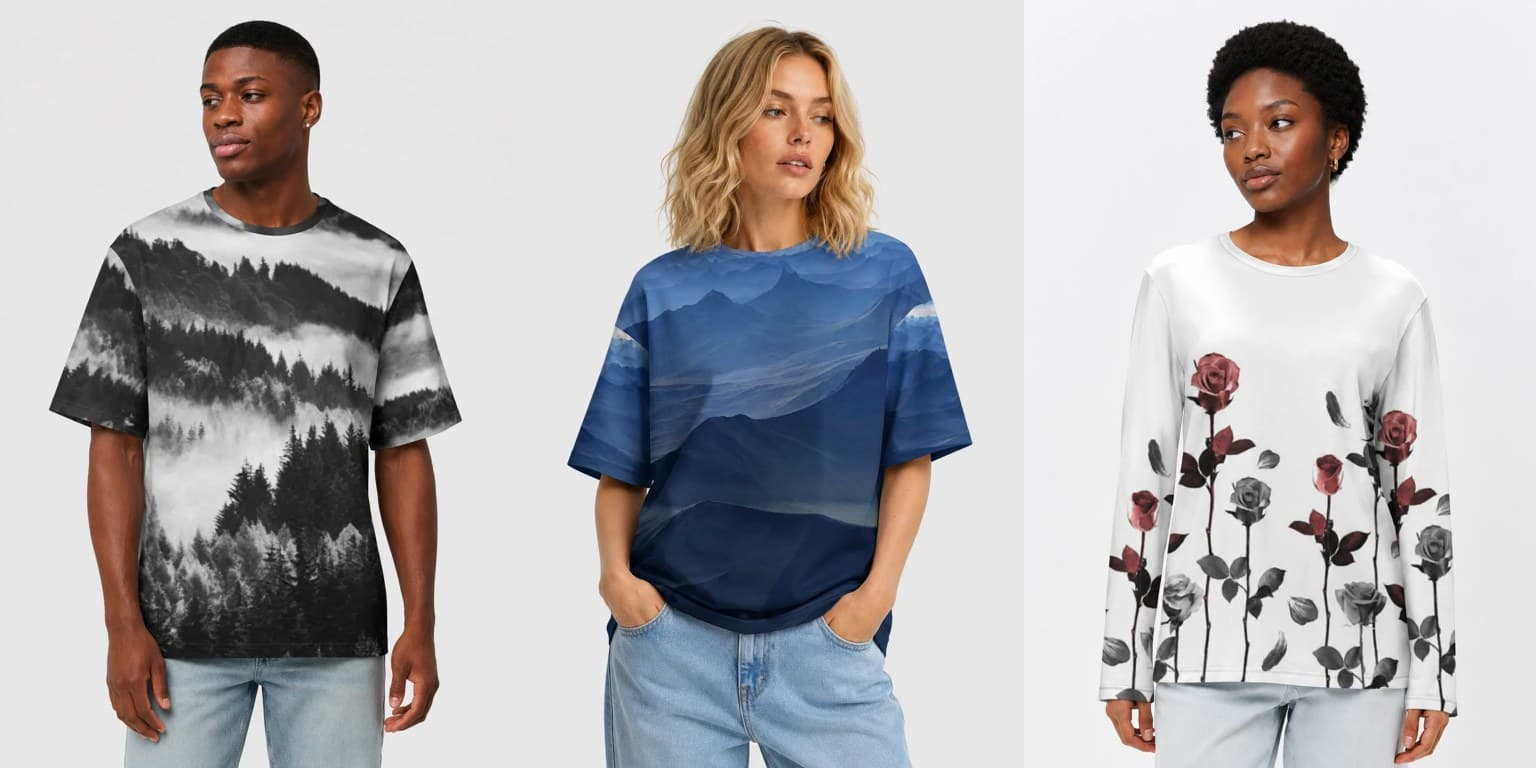
Full-canvas removes the frame that made chest prints work. Rhythm, scale, seams and the 3260×4096 window that stays whole.

Drawing, vector, generative tools, photography — four routes to a full-canvas print, and what each one is good and bad at on a real production line.
You keep the copyright. But a brand name in a design title can pull an entire catalog out of Google Shopping — here is what we can and can't print, and why we are strict about it.
Eight dye channels, no white ink, and a safe zone smaller than your canvas: what actually happens to a file between your screen and a cotton garment.