All-Over Print Sizes: What to Check Before You Order
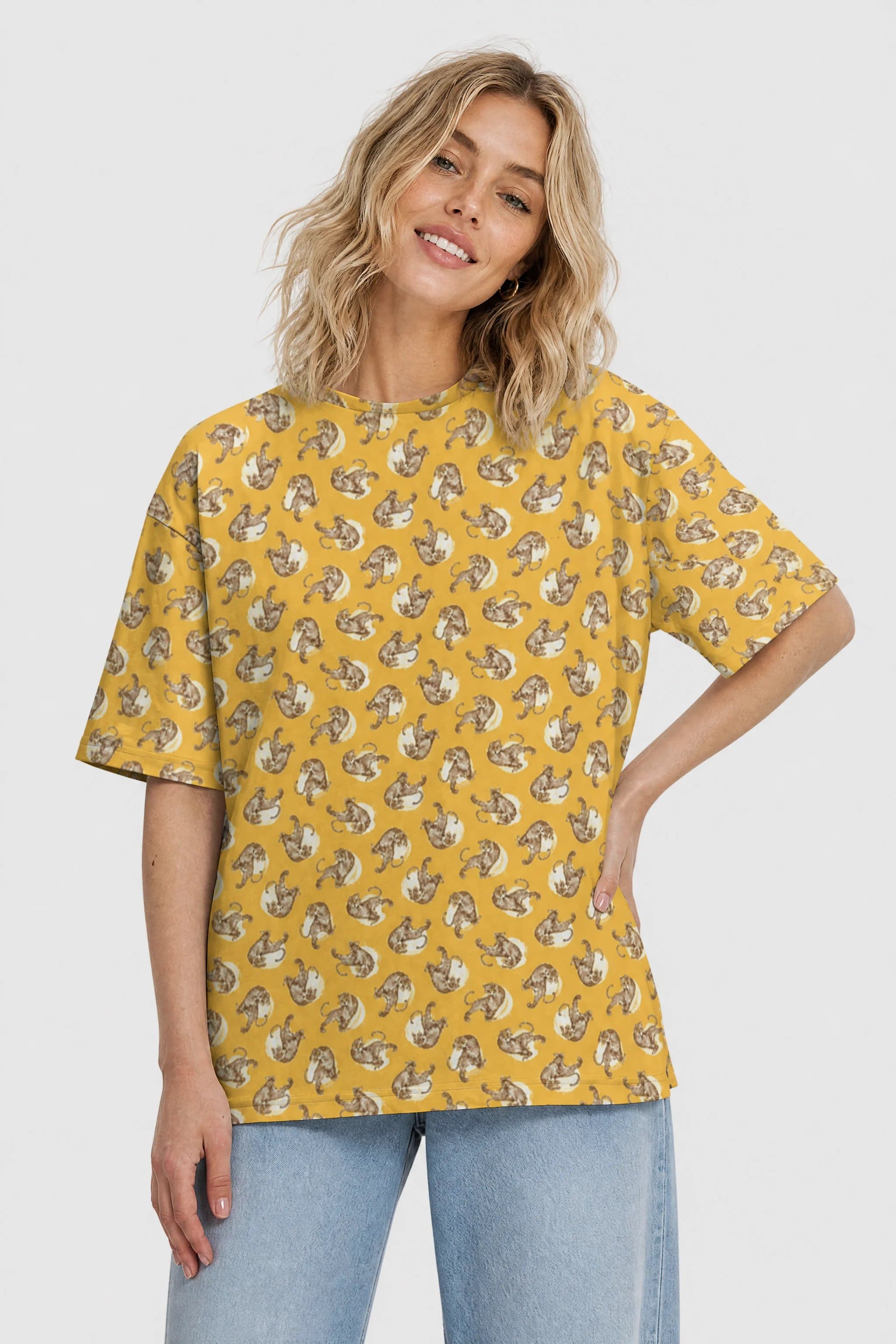
An all over print size question is really two questions in one, and the phrasing hides which one you mean: how big the design is, or which shirt size to order. A placement print makes you answer both: pick a print size and a position, then a garment. An all-over print removes the first question entirely, because the design covers the fabric before the shirt is cut and sewn. What is left is the decision you actually shop for: which cut, and your size in it.
The short answer
There is no print size to pick on an all-over print — the artwork takes the whole surface, edge to edge, so the print is exactly as big as the shirt. Sizing therefore works like any garment sizing: a basic tee, an oversized tee and a long sleeve in your regular size, kids’ shirts chosen by the child’s height, and no need to order bigger to "leave room for the print" — there is nothing to leave room for. The fabric has already been washed hot in production, so most of the shrinking cotton would do has happened before the shirt ships.
What all-over print size means: the shirt is the whole print
With a placement print, the trade is explicit: a logo on the chest, a few centimeters wide, wherever you position it — that is the placement print vs all-over print split, and it is also where "print size" belongs. On an all-over garment that control vanishes by design. The designer builds the artwork on the full garment canvas — the composition for a full canvas guide walks through it — knowing the fabric will be printed as a sheet and trimmed to body parts. The print does not sit inside a number you chose; it becomes the shirt.
That is why the same design can live on any cut in the store: the all-over print t-shirts collection shows one artwork across the whole rack, because the cloth is printed before the cut. Change the size of the shirt and you change the frame, not the picture — a busy pattern that survives any crop stays itself.
The three cuts, and where the seams fall
Sizing a whole-print shirt means choosing a shape first:
- Basic tees. The standard cut: shoulder seam at the edge of the shoulder bone, hem ending at the hip. The women’s basic tee is cut short and close, so it fits as a fitted tee does.
- Oversized tee. A separate pattern, not your size plus one: roughly 8 cm wider across the chest and 7–9 cm longer than the basic, with the shoulder seam dropped down the arm. The oversized fit checkpoints show where its seams fall — and why your regular size, not a size up, is the intended fit.
- Long sleeve. The same torsos with sleeves that carry the print down the arm; oversized long sleeves are the most fabric we print on, so the design gets both arms to the wrist.
Across every cut the print behaves identically: it flows across a seam but does not align perfectly from panel to panel, because the fabric is printed before it is cut and sewn. Busy patterns hide it; a single centered portrait does not.
Kids, and the one number the chart really asks for
Kids’ shirts are sized by height, from 86 to 170 cm — measure the child once, pick the range, and the same three shapes exist in the smaller cuts. The kids’ all-over print shirt guide explains why height beats age labels. For adults the size chart on each listing takes the usual measurements; one reassurance is built in: the print has no settings of its own to get wrong.
Choosing a size: the short list
Choose the basic tee if you want the print read quietly, at the length and drape of a classic shirt.
Choose the oversized tee if the shirt should hang — the design gains the dropped shoulder and the arm as canvas.
Choose the long sleeve if the design should travel past the elbow, or fall is coming and you want the extra fabric.
Then take your regular size in the chosen cut. Two reasons to hold there: sizing down in the oversized shape buys a smaller version of the same loose cut, not a fitted tee; and the fabric is washed hot before cut and sew, so the shrink cotton was going to do is largely done in production. Wash cold and skip the high-heat dryer to keep it that way.
And if the question is how the oversized shape differs from a normal one at all — chest width in centimeters, back length, the dropped seam — the oversized t-shirt vs normal comparison puts numbers on it.
FAQ
Does an all-over print change which size I should order?
No. The print is made on the fabric before the shirt is cut, so it follows whichever size you choose; the garment decision — basic, oversized or long sleeve — is the only one that matters.
How big is the print on an all-over t-shirt?
Edge to edge: the artwork covers the entire surface, so "print size" and "shirt size" are the same measurement. The design runs over the chest, back and down the sleeves with no blank side.
Do I need to size up because it is cotton?
No. The 100% cotton fabric is washed hot in production before cut and sew, so most shrinking has already happened; wash cold and avoid the high-heat dryer to keep the fit as bought.
The bottom line
An all-over print removes "print size" from the buying decision by taking the whole surface, and leaves the honest one: which cut and which size of it. Pick the shape by how you want the print to wear — read quietly on a basic, hanging on an oversized, traveling down the arms on a long sleeve — take your regular size, and the design will land wherever the shirt does.