
All-Over Print vs Sublimation: Not the Same Thing, and the Difference Is the Fabric
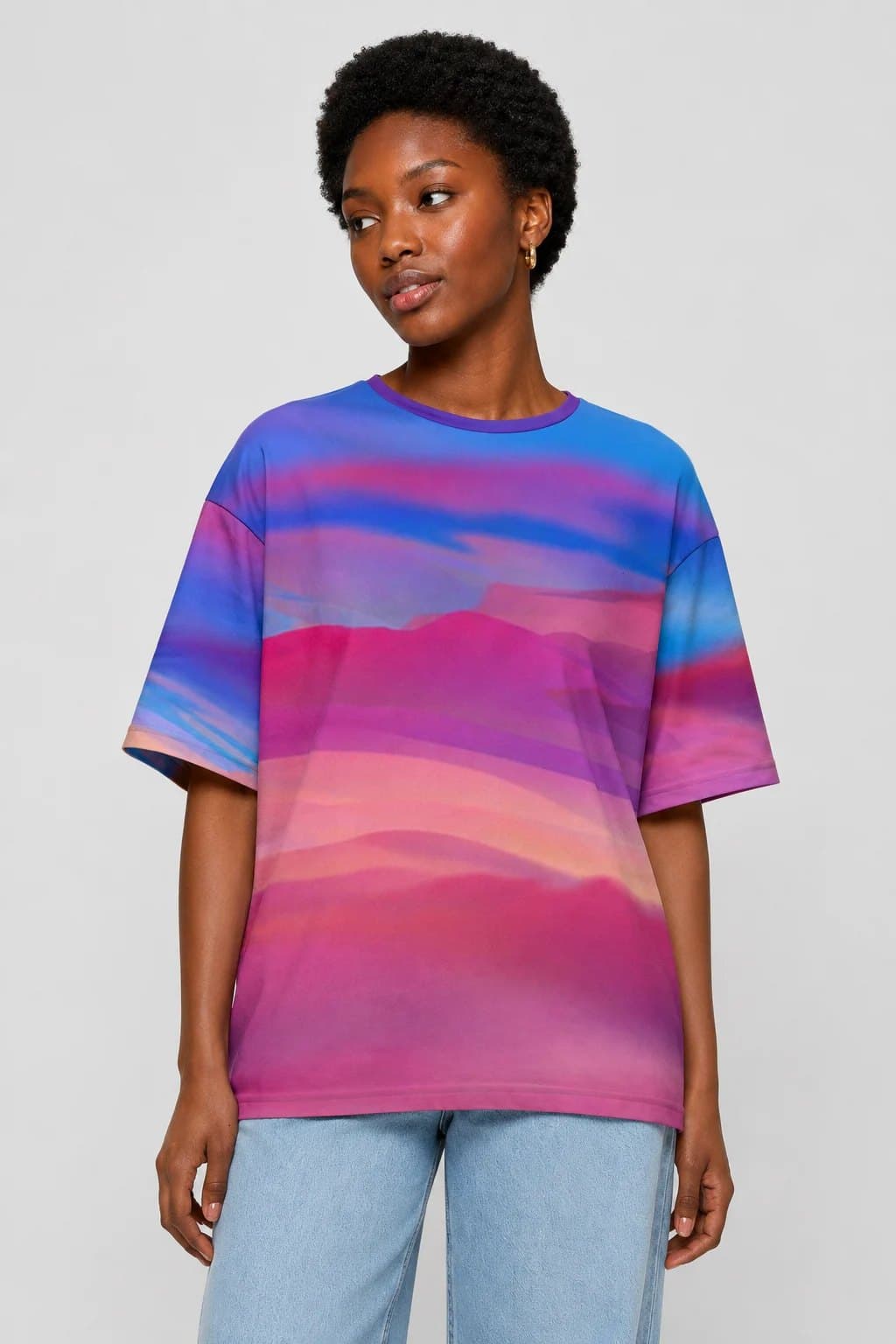
The two phrases get used as if they were rivals, and listings blur them on purpose. In fact they answer different questions: an all-over print describes how much of the shirt carries the design, while sublimation names a printing method. Most sublimated shirts happen to be all-over, which is how the confusion started. But full coverage exists on cotton too, through a different method — and once you see that, the choice between them becomes a choice between fabrics.
The short answer
An all-over print is any shirt where the artwork covers the whole garment — front, back and sleeves. Sublimation is one printing method that can achieve that coverage, and it bonds dye only to synthetic fibers, so every sublimated shirt is polyester. Full coverage on 100% cotton comes from a different method, reactive dye, which bonds with the cotton fiber itself. So the real comparison is not coverage against method: it is sublimated polyester against reactive-dyed cotton.
Coverage is a look, sublimation is a method
An all-over print — also called a full print, an AOP shirt or an edge-to-edge print — is defined by the canvas: the design reaches the seams, runs down the sleeves and covers the back with no blank panel. The term says nothing about how the color got there.
Sublimation is a specific answer to that "how". The dye is turned into a gas and bonded into synthetic fiber, which is why it works on polyester and only on polyester — on cotton it washes out. Because the whole sheet of fabric passes through the press, the result naturally covers the garment edge to edge. That is why the two phrases travel together in listings.
Reactive printing is the other route to the same look: the dye forms a chemical bond with the cellulose the cotton is made of. Same edge-to-edge coverage, different fabric. And both methods share one property that surface prints do not have — the color sits inside the fiber, not on top of it, so there is no ink layer to crack or peel.
All-over print vs sublimation: the honest scorecard
Price and speed — sublimation wins. It is the cheapest way to fill an entire shirt with artwork, which is exactly why most of the market uses it. Reactive full-garment printing is slower and usually made to order — production takes 2–7 business days before a shirt even ships.
Color range — sublimation wins. True neon and fluorescent colors are out of reach for any dye that bonds to cotton; polyester holds them. One tie in this round: neither method has white ink, so on both a white area in the design is undyed fabric, and light artwork on a dark ground is not really possible with either.
Feel and breathability — cotton wins. Sublimated polyester feels slick and traps heat and sweat. Reactive-dyed cotton breathes like any cotton shirt and sheds no microplastic into the wash.
How the shirt wears over time — cotton wins, with a caveat. Neither print fades by cracking, because neither is a surface layer. The difference underneath is the fabric: cotton keeps its softness and its hand for years, while polyester keeps its color range but not its feel.
Choose sublimated polyester if the shirt is for sport, you want the brightest possible color range including neon, and the fabric does not matter to you.
Choose reactive-dyed 100% cotton if you want a shirt that breathes, feels like cotton, and carries the same full-coverage design — accepting that neon is not on the menu.
How to tell which one a listing is
The fabric line decides it. Polyester — or any blend — under full-coverage artwork means sublimation. A genuine "100% cotton" label with a design that runs over the seams means reactive dye. When the fabric line is missing, treat it as polyester and check the photos: a pattern that stops at an invisible rectangle is not full coverage at all, whatever the title claims — the sixty-second polyester checklist turns that test into photos you can check in a minute.
Every design at allover.art is printed with reactive dye on 100% cotton instead of sublimation — the fabric is printed edge to edge before it is cut and sewn, and you can see how far that goes in the all-over print t-shirts collection.
FAQ
Is sublimation better than all-over print?
They are not competitors: all-over print is the coverage, sublimation is a method that produces it. The real choice is sublimated polyester versus reactive-dyed cotton — sport and neon on one side, breathability and natural fiber on the other.
Can sublimation printing be done on cotton?
No. Sublimation dye bonds only to synthetic fibers, so on cotton it does not hold. A cotton shirt with genuine full coverage is reactive-dyed — the dye bonds with the cellulose inside the fiber.
Which one lasts longer, sublimation or reactive print?
Neither print cracks or peels, because both bond the color inside the fiber instead of laying ink on the surface. What ages differently is the fabric: polyester keeps its brightness, cotton keeps its breathability and softness.
The bottom line
All-over print vs sublimation is a category error that a single question fixes: what is the shirt made of? Sublimation means polyester and the widest color range, including neon. Full coverage on cotton means reactive dye and a shirt that behaves like cotton. If the vocabulary around full print still feels crowded, the full print t-shirt glossary sorts the terms out in one page, and the fabric question in depth is covered in which fabric an all-over print really uses — where the answer is not always polyester. For how this split looks across the whole market, see how the market splits between these routes.