
Camo T-Shirt Cotton vs Polyester: What the Fiber Decides
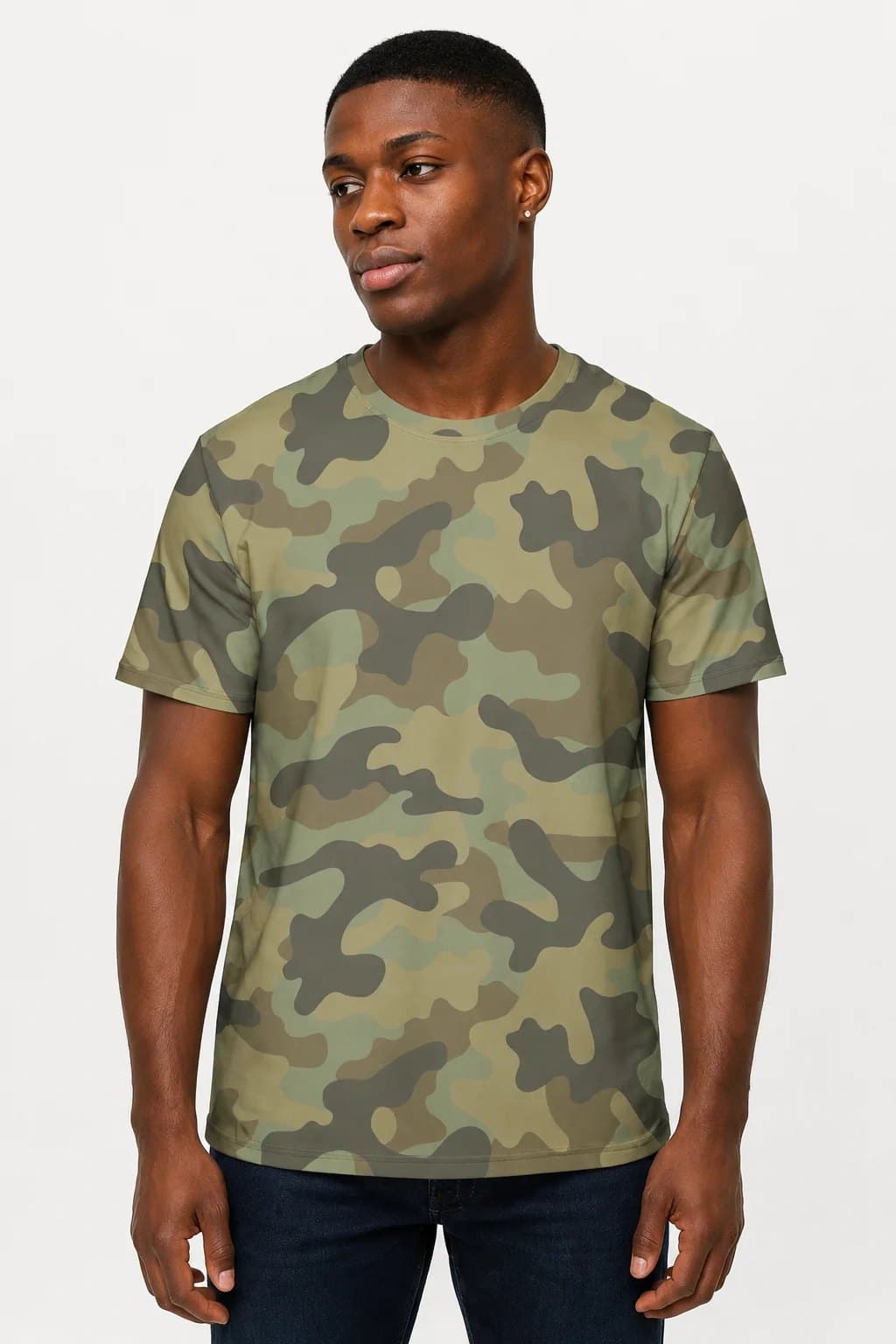
A camo t-shirt in cotton — also searched as a camouflage tee, a woodland camo shirt or an all-over camo graphic tee — sounds like the easiest purchase in the pattern world. It is the one pattern that was always meant to cover the whole garment. Yet the camo shirts that genuinely do that are almost always polyester, and the reason is chemistry, not taste. This page is the buyer's side: what the fiber changes, how the pattern behaves across a whole garment, and the sixty-second check that settles the choice.
The short answer
Camo on 100% cotton exists, and the pattern is a natural fit for full coverage: no single subject to place, no up or down, irregular shapes that forgive a seam. Most full-print camo you will find is sublimated polyester, because sublimation bonds only to synthetic fibers. Read the fiber line first, then the sleeve photos.
Why most full-print camo is polyester
Camouflage comes from outdoor and service wear, where the fabric was picked for the job: synthetic microfiber dries fast, wicks sweat and moves quietly through brush. Sublimation printing, the default method for edge-to-edge color, bonds only to synthetic fibers — so the performance-fabric tradition and the full-coverage method point the same way: camo all over, on polyester.
On cotton, camo usually shrinks to a placement print: a chest rectangle on a finished blank. A rarer third route is pigment all-over printing on cotton, where ink sits on the surface — a stretched seam or a deep crease shows pale lines, and the print cracks with washing. The route that covers the whole garment and stays in it is reactive dye: it bonds with the cellulose inside the fiber, which is how 100% cotton carries a pattern edge to edge without a plastic layer. Why cotton earns its place outdoors at all — breath, feel, what to pack — is covered in our cotton hiking tee guide.
What camouflage does on a whole shirt
Camo is a texture, not a picture. A woodland pattern has no focal subject to park on the chest and no orientation to preserve, so it fills a garment the way a fabric surface does.
The same irregularity is honest about seams. Any full-print garment continues its pattern across a seam without aligning it — the physics of sewing pre-printed cloth — and camouflage forgives the interruption better than almost any other style, because a random blob boundary reads as part of the texture. The palette favors reactive dye too: deep browns, olives and forest greens are exactly where cotton dye is strongest. Bright color is real; fluorescent glow, the neon-camo look, is out of reach for any dye that bonds to cotton.
Camo t-shirt cotton: the 60-second check
The fiber line. Read the label before the photos. 100% cotton means the tee feel — soft, matte, breathable, no plastic hand. "Polyester" anywhere in the line means the coverage came from sublimation. Our fiber line is one material: reactive-dyed 100% cotton, Oeko-Tex Standard 100 certified. If the listing hides the composition, how to spot polyester before you buy runs the same test for any garment, and cotton vs polyester for all-over print explains why the two will never feel alike.
The coverage. A chest rectangle is camo too — "camo" says nothing about coverage. True full-coverage shows the pattern past the shoulder seam, down the arm and across the back panel, because the fabric was printed before the shirt was cut and sewn. A listing that only shows the front is usually hiding plain sleeves. Camo designs live across the outdoor and hiking collection on allover.art — classic woodland like Woodland Camo Print and Classic Green Camouflage, and animal variants like Waterfowl Camo Silhouettes and Fish Silhouette Camo — all printed edge to edge on 100% cotton and made to order in 2–7 business days.
The seams. Expect the pattern to continue across a seam without aligning — no cut-and-sew garment can promise seam-matching. On camo you will barely find the interruption. Choose cotton if the shirt is for everyday wear — it breathes and feels like the tees you already own. Choose polyester if you need technical performance — fast drying and moisture wicking on a hard trail day. The pattern works either way; the fiber decides how it wears.
FAQ
Is a camo shirt better in cotton or polyester?
Depends on the use. For everyday wear, cotton breathes and feels like a regular tee. For technical outdoor use, polyester wicks and dries fast. Sublimated polyester holds its camo well — the dye sits inside the synthetic fiber — so the difference is the fabric, not the print's durability.
How do I know a camo print really covers the whole shirt?
Look for photos of the sleeves and the back. Edge-to-edge printing happens on the fabric before the shirt is cut and sewn, so the pattern runs past the shoulder seam. A placement print stops at a border, and a listing without sleeve photos usually has one.
Will a cotton camo print crack or peel?
Not when the color is reactive dye: it bonds inside the fiber, so there is no print layer to crack. The fabric is washed hot in production before cutting, so most of the shrinking cotton does has already happened before the shirt ships.
The bottom line
Camo was born to cover, and the fiber decides how it wears: polyester for the fast-drying trail day, cotton for the tee you live in. The all-over print t-shirts hub keeps the cotton side of the pattern — woodland greens, digital textures and the animal variants — across every cut we make.