
Clothing Brands With Flowers All Over: How to Spot the Real Thing
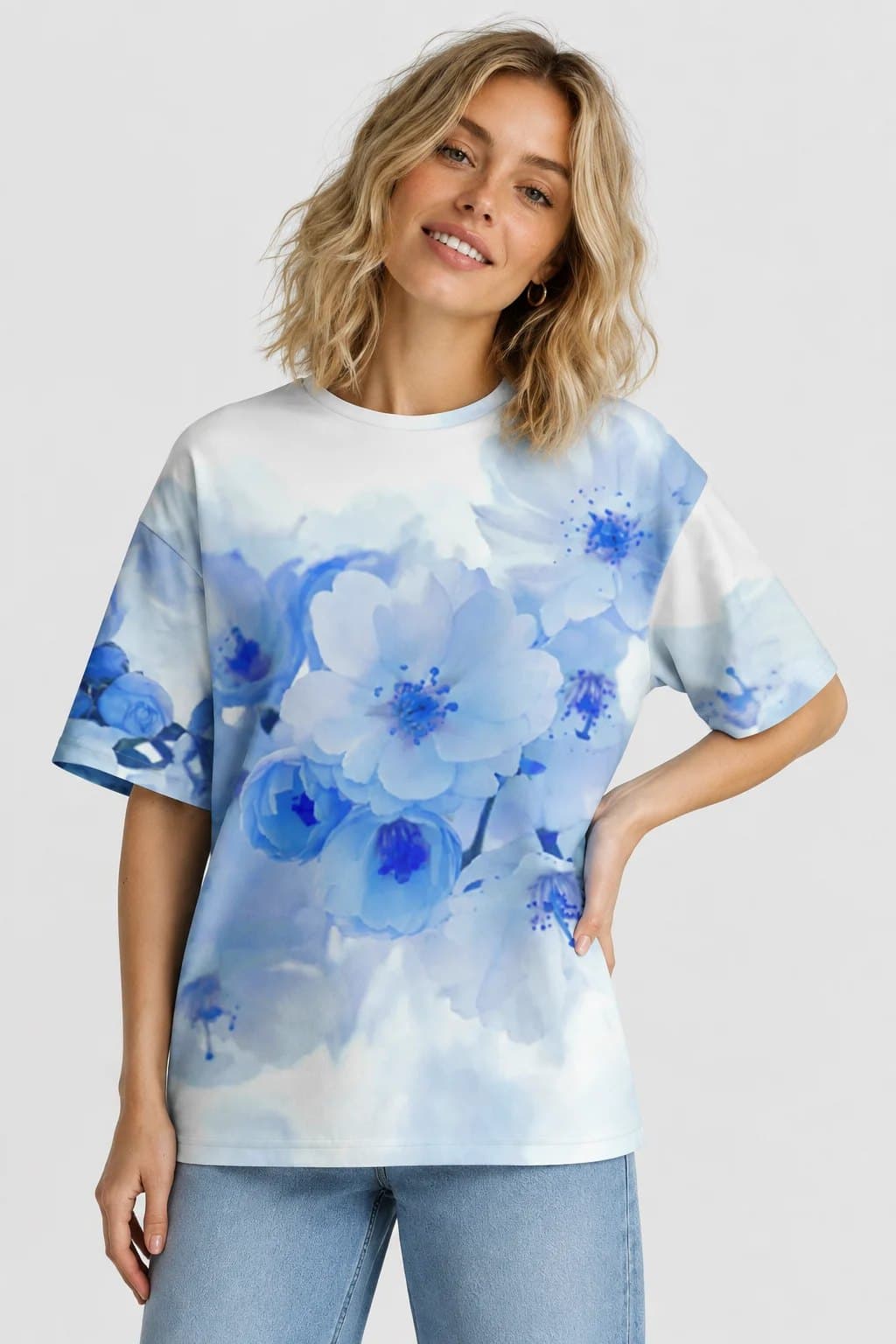
Search "flowers all over" and you get two different shirts. One has a rose on the chest and blank cotton everywhere else. The other is covered — blossoms down the sleeves, across the back, around the hem — so the flowers are the shirt. Listings blur the two on purpose, because a small floral print is cheaper to make. Here is how to tell which one you are actually buying, and what separates a brand that does the full canvas well from one that just says so.
The short answer
A genuine flowers-all-over shirt has artwork on every panel: front, back and both sleeves, with no blank stretch of fabric anywhere. To verify it, look past the product hero shot to the sleeve and back photos, then read the fabric line — true full-coverage florals on 100% cotton are made by printing the fabric before the shirt is cut and sewn, which is also the only way the pattern can reach the seams at all. If a listing only shows the front, assume the sides and back are plain.
What "flowers all over" promises — and what most shirts deliver
The phrase describes coverage, not style: any floral language — vintage roses, cherry blossoms, botanical line work, watercolor petals — counts once it covers the whole garment. What usually arrives instead is a placement print, also called a chest or front print: a flower cluster inside a rectangle on the chest, sometimes a small one on the back, and plain fabric everywhere else. There is nothing wrong with that look, but it is not flowers all over, whatever the title claims.
Coverage is binary, so it is easy to check: find a photo of the sleeve. A real all-over floral shows blossoms running past the shoulder seam and down the arm — the printed fabric hangs there like the rest of the shirt. A placement print stops at an invisible border, because it was applied to a finished blank.
Flowers all over: three ways brands actually make it
The method decides how the shirt wears, so it is worth one paragraph. Surface printing — DTG, screen print, DTF — applies ink to a finished shirt, which is why it cannot cover the whole garment; the panels are already sewn. Sublimation covers everything but bonds dye only to synthetic fibers, so those florals live on polyester. Reactive dye printing is the route that combines full coverage with natural fiber: the cloth itself is dyed before cutting, and the color bonds with the cotton the same way dyes bond in denim. That is the method behind every floral design here — printed edge to edge, then cut and sewn — and the difference you feel is real cotton, not a slick synthetic sheet.
How to judge a floral brand in three checks
- The sleeve test. Find the arm photo. Blossoms past the shoulder seam mean the fabric was printed before assembly; a clean sleeve means the "all-over" claim is only the front panel.
- The fabric line. Genuine full-coverage on cotton means reactive dye. Polyester, or any blend, means sublimation — fine for gym wear, a different feel. No fabric line at all is its own answer: treat it as polyester and look at the photos.
- The pattern itself. A floral that works all over is drawn to repeat: scattered blossoms, vines, falling petals — no single giant flower fighting the seams, nothing important parked where a shoulder crease lands. Weak brands rescale one chest graphic; good ones compose for the whole garment. The seams show it: a print that flows across a shoulder seam without an obvious break was laid out with the body in mind.
FAQ
Do any clothing brands print florals on all-over 100% cotton?
Yes, but they are the minority, because printing the fabric before cut and sew is slower than decorating a finished blank. Check the fabric line for 100% cotton, then check the sleeve photo — the pair together is the honest signature of a true all-over floral brand.
What is the difference between a floral all-over print and a floral chest print?
Coverage. The chest print is one design area on an otherwise plain shirt; an all-over print covers front, back and sleeves because the whole fabric was printed before the garment was cut. The chest print costs less and ships faster; the all-over print is the look the phrase describes.
Why do full-coverage floral shirts usually cost more?
Printing and sewing an entire garment from pre-printed fabric takes more material handling than pressing a graphic onto a stock blank, and made-to-order production adds days before shipping. What you get for it is coverage that cannot exist on a finished shirt and cotton that feels like cotton.
The bottom line
Flowers all over is a claim you can verify in a minute: the sleeve photo proves the coverage, the fabric line proves the method, and the pattern proves someone designed it for a body rather than a rectangle. When you want to see the look done on cotton, the floral t-shirts and botanical t-shirts collections are printed edge to edge in reactive dye, and the vintage floral t-shirt guide covers the faded look specifically. If the fabric question is still open after a listing, the sixty-second check in how to spot polyester before you buy settles it, and what fabric an all-over print really uses explains why cotton and full coverage rarely meet — except where the fabric is printed first, not decorated after.