
WYSIWYW: what you see is what you wear
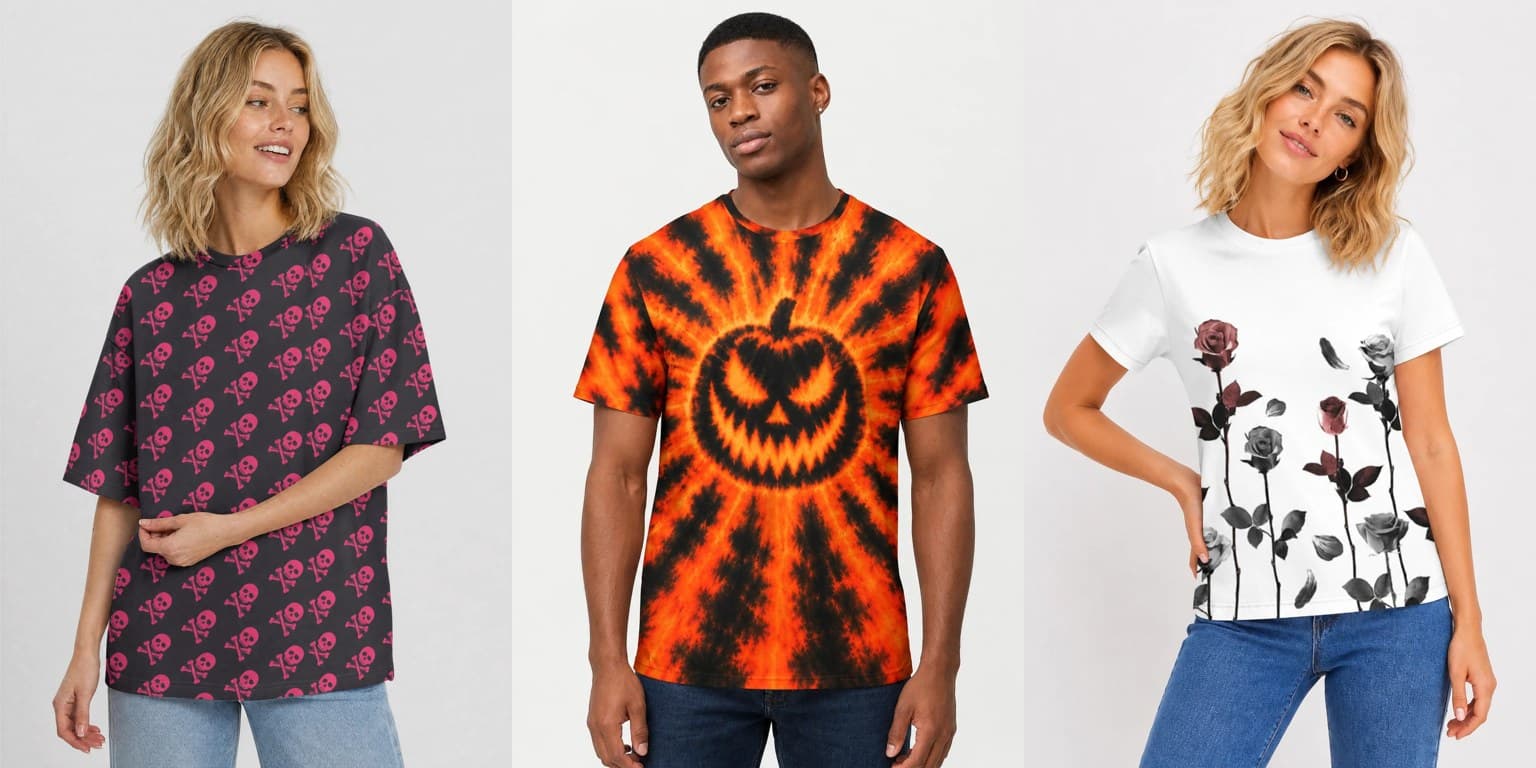
Programmers have had WYSIWYG since the eighties — what you see is what you get, the idea that the thing on your screen is the thing that comes out. Clothing never had an equivalent. You saw something beautiful, you took a photo of it, and that was the end of it: the photo went into a folder with nine thousand others.
So we're stealing the acronym and moving one letter.
WYSIWYW — what you see is what you wear.
This one took a flight
Somewhere over the clouds, window seat, phone out. Four photos, none of them planned, none of them art-directed. A window frame with a hard bright oval in it. A horizon so clean it looks like a gradient someone drew. Scattered cloud over land. And a dense popcorn field of cloud at low sun, which stopped looking like weather and started looking like fabric.
That popcorn field is the point. It has no subject, no center, no top or bottom — it repeats, it varies, and it holds together at any crop. It is already a textile. It just hadn't been printed yet.
Three of those four are shirts now
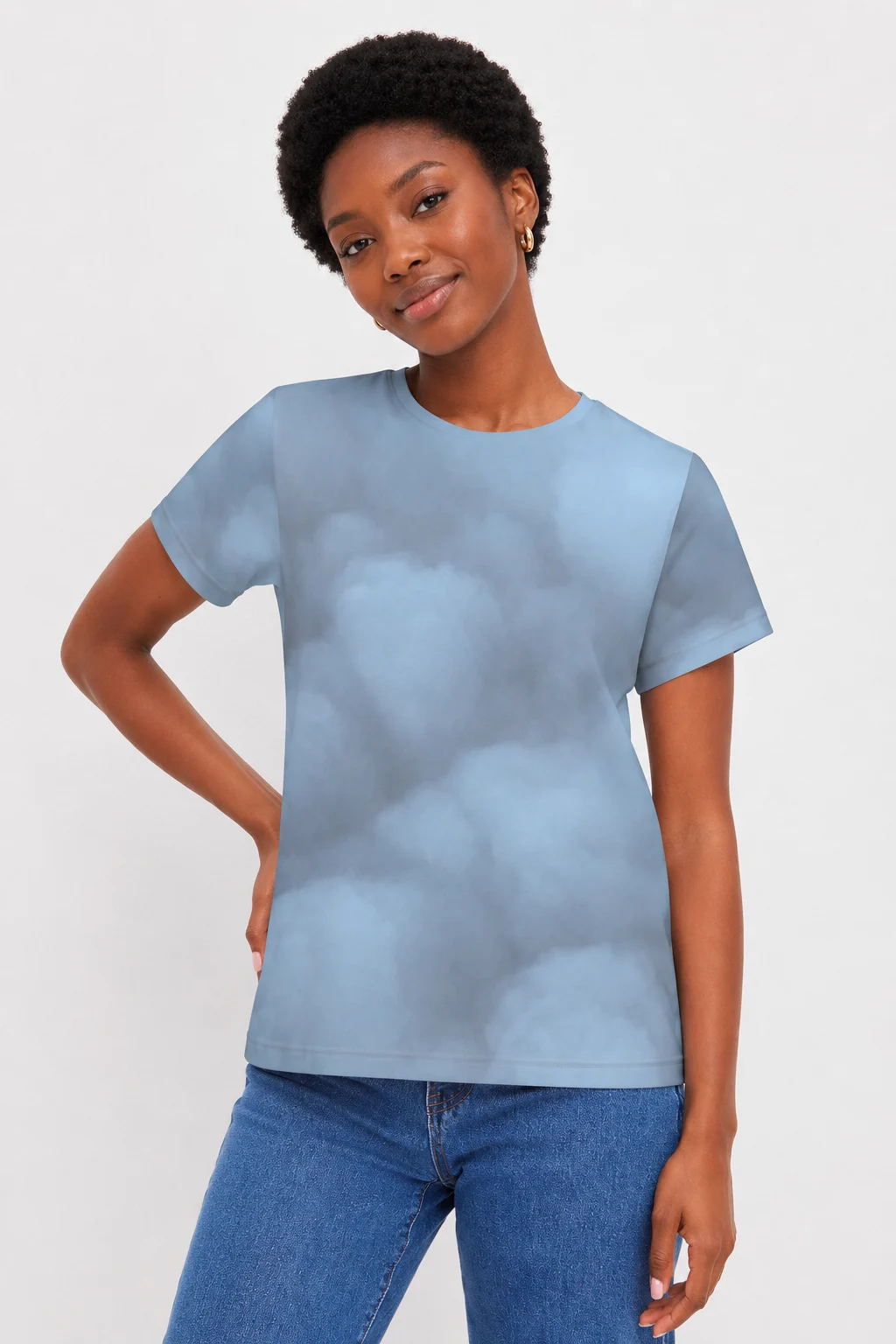
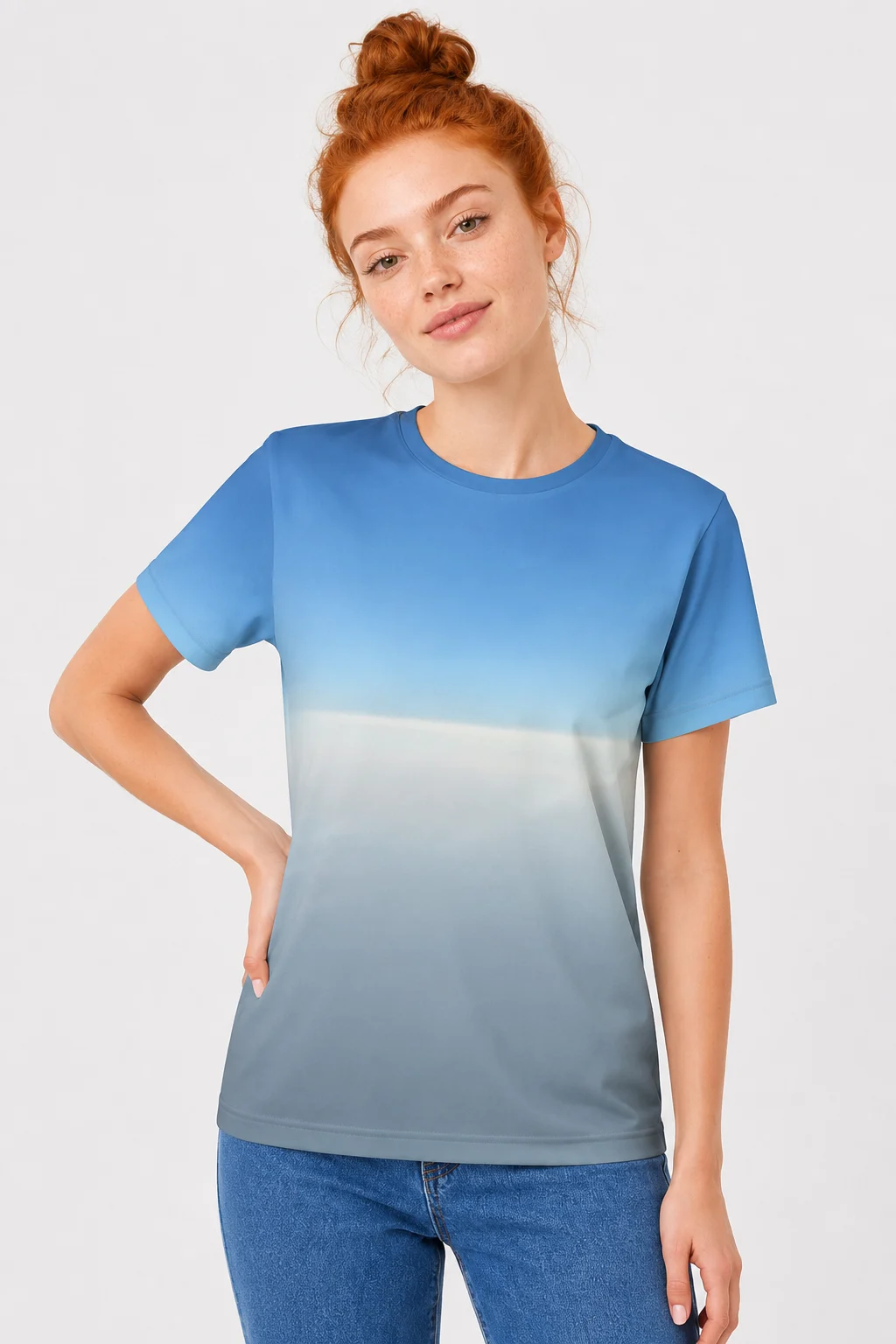
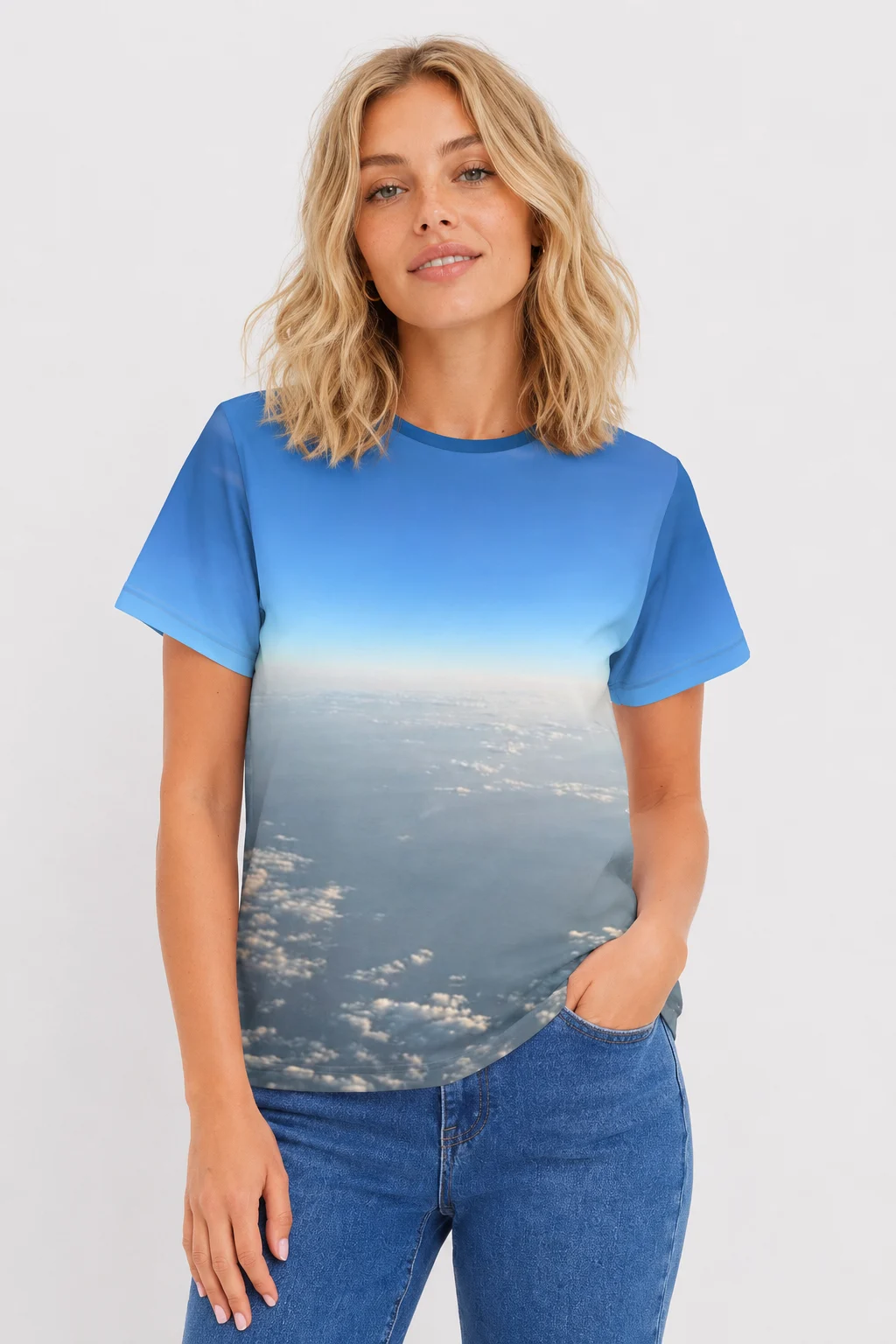
From seat 14A to a garment
The whole process, honestly, is this: open the studio, upload one photo as the front, one as the back, and the layout is built for you. That's it. No files to prepare, no template to learn, no vector anything.
Then it goes through the same production as everything else we make — reactive dye, edge to edge, printed onto the fabric before the garment is cut and sewn from it. The sky ends up in the cotton rather than on top of it, which is why a photograph of clouds comes out looking like cloth rather than like a poster of clouds.
Saw it. Liked it. Wore it. No intermediate profession required.
Why photographs work better here than anywhere else
On a chest print, a photograph becomes a rectangle stuck to a shirt. It reads as merchandise, always. Full canvas removes the rectangle, and a photograph of something with texture — clouds, water, foliage, rust, stone — stops being an image of a thing and becomes a surface.
Three things that make a photo work as a garment:
- No single subject. A face fights the body wearing it. A field of cloud doesn't.
- Variation everywhere. If any crop of the photo is still interesting, every part of the shirt will be.
- Light that goes somewhere. Your phone's dynamic range is the limiting factor; shoot into interesting light rather than flat noon.
None of that requires you to be a photographer. It requires you to notice.
The invitation
You have the folder. Everyone does — the sky from a plane, the sea from a ferry, the pattern of tiles in a bathroom somewhere abroad, the tree outside a window in autumn. Most of it will never be looked at again.
Some of it is fabric.