Animal Print Shirts: The Face or the Skin
An animal print shirt can mean a leopard tee with one big face on the chest, a zebra print top covered in stripes from collar to hem, or a cheetah shirt for kids. Shoppers use the same words for both kinds, and listings rarely say which one they are selling. The difference is not styling — it decides whether the whole garment is printed or a rectangle on the chest is. Here is how to tell them apart before you buy.
The short answer
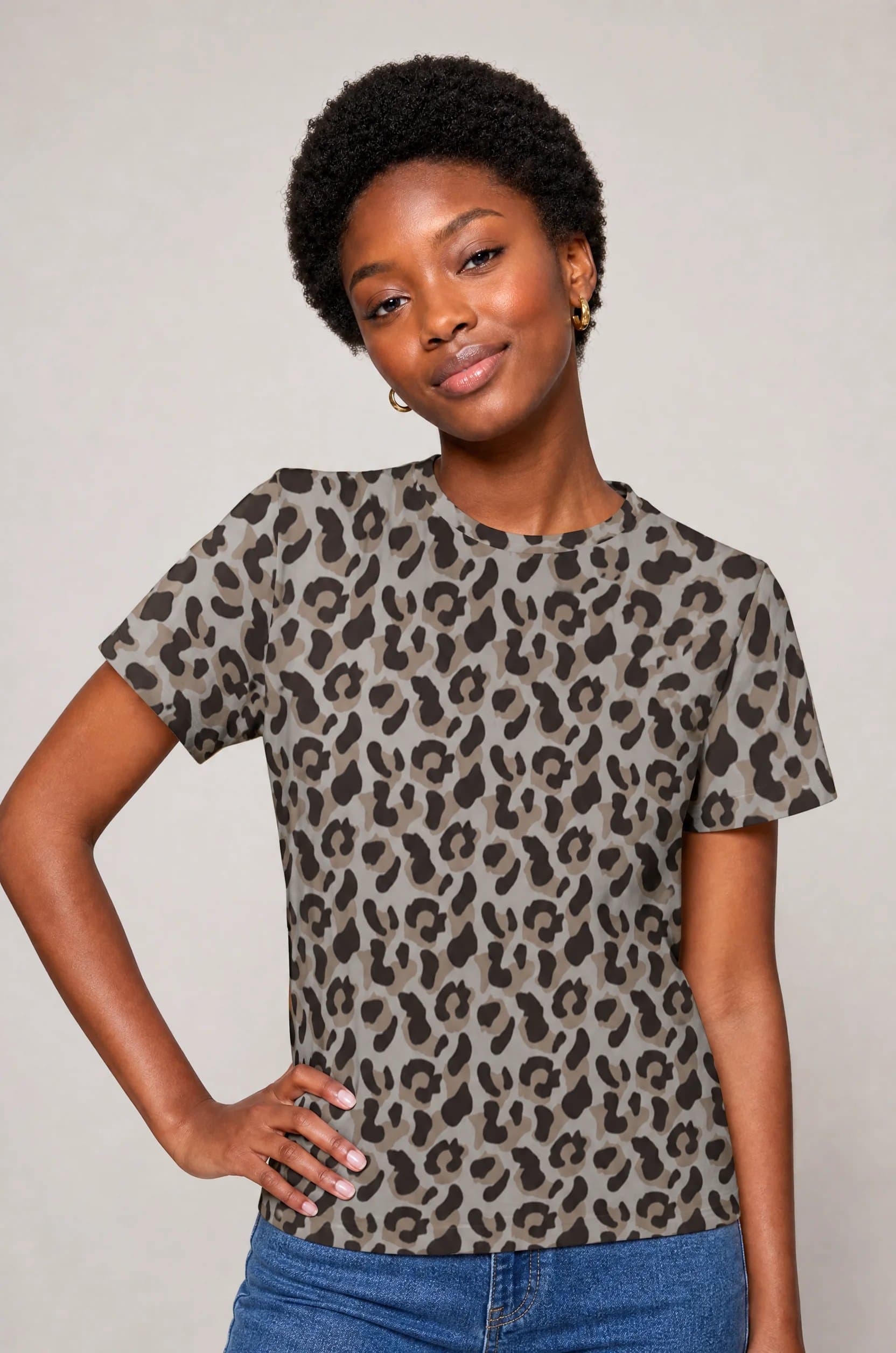
Animal print comes in two shapes. The face — a lion, a tiger, a wolf portrait — is a subject, and a subject needs a placement print with a border. The skin — leopard rosettes, zebra stripes, cheetah spots — is a pattern with no top and no bottom, and a pattern is what covers a whole garment. Read the sleeve photos: if the print runs past the shoulder seam, you are buying the skin.
Why the face stays on the chest
A face is a focal subject. It has an orientation, it needs to sit where people look, and it cannot repeat across the fabric without turning into wallpaper. That is why animal-face shirts are placement prints: the design fills a rectangle on a finished blank, and the rest of the shirt stays plain. On allover.art the face prints live in their own animal face collection — it is a different product from a full-coverage shirt, and both are honest options: the shirt is the frame, the animal is the message. How the two print types differ technically is in our placement vs all-over print guide.
The skin was always a pattern
Leopard rosettes and zebra stripes covered an animal long before they covered a shirt. They have no focal subject to place and no orientation to preserve, so they fill a garment the way fabric does — and like camouflage, a random spot boundary reads as part of the texture, which makes them forgiving across seams.
That is why the skin works as a true all-over print: the fabric is printed edge to edge before the shirt is cut and sewn, so the pattern runs past the shoulder seam, down the arm and across the back panel. Classic Leopard All Over Print and Bold Black And White Zebra Pattern come in every cut we print — men's and women's basic, oversized and long sleeve, plus the kids' versions — all reactive-dyed 100% cotton. The cheetah prints, Cheetahs On Pink, Golden Cheetahs On Black and Cheetahs In Tropical Jungle, live in the kids' section, sized by height rather than age; the fit logic is the same as for any kids' all-over print shirt. The wider skin-and-print range sits in our leopard and animal print collection. Cats run the split within one animal — portrait faces on a chest, whole-crowd repeats across a full print — and our cat t-shirts list gathers the whole-shirt designs.
Animal print shirt: what to check in the listing
Coverage. The word "animal" says nothing about how much of the shirt is printed. A listing that shows only the front is usually hiding plain sleeves, because a placement print stops at its border. Full coverage shows the pattern past the shoulder seam and across the back.
The subject test. Ask what the design is a picture of. If the answer is an animal — one face, one figure — expect a placement, and expect a border. If the answer is a surface — rosettes, stripes, spots — the design can tile, and a good listing will show the sleeves to prove it.
The fiber. Composition decides how the print wears, not how far it reaches. 100% cotton takes reactive dye, which bonds inside the fiber, so the pattern has no plastic layer to crack. Full coverage on polyester comes from sublimation, which bonds only to synthetics; the feel of the two fabrics is not the same, and our cotton vs polyester comparison explains why. Choose the skin if you want the shirt itself to be the statement — the pattern does the styling. Choose the face if the animal is the message and the shirt is the frame. Both are legitimate; only one of them covers your sleeves.
FAQ
Does animal print mean the shirt is printed all over?
No. The words describe the design, not the coverage. A leopard face on the chest is an animal print with a placement; leopard rosettes running past the shoulder seam are an all-over print. Check the sleeve photos, not the words.
Which animal prints work as full coverage?
The ones that are patterns on the animal itself: leopard, zebra, cheetah, snake or giraffe markings. They have no single subject and no orientation, so they fill a garment naturally. A portrait of the animal cannot tile — it needs a placement border.
Is an animal print shirt possible on 100% cotton?
Yes. Reactive dye bonds with the cellulose inside the cotton fiber, so the pattern is in the fabric, not on it. The print covers the whole garment without a plastic layer, and the shirt still feels and breathes like cotton.
The bottom line
Animal print is two products sharing one name: the face, which sits in a bordered rectangle, and the skin, which covers the garment the way it covered the animal. The collections above show both sides, and the sleeve photos on each card settle the question the words leave open.